
Description
Edapt NR507 Week 1 Immune Response
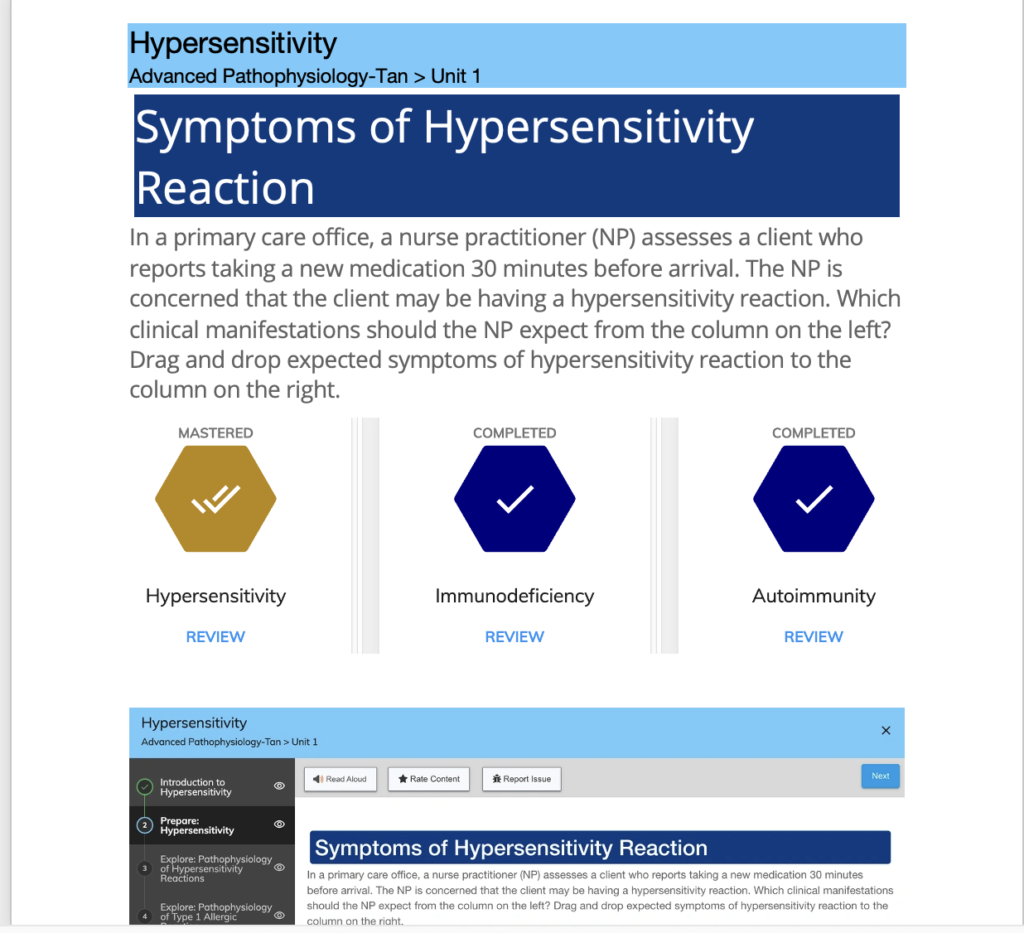
Hypersensitivity
Advanced Pathophysiology-Tan > Unit 1
Symptoms of Hypersensitivity Reaction
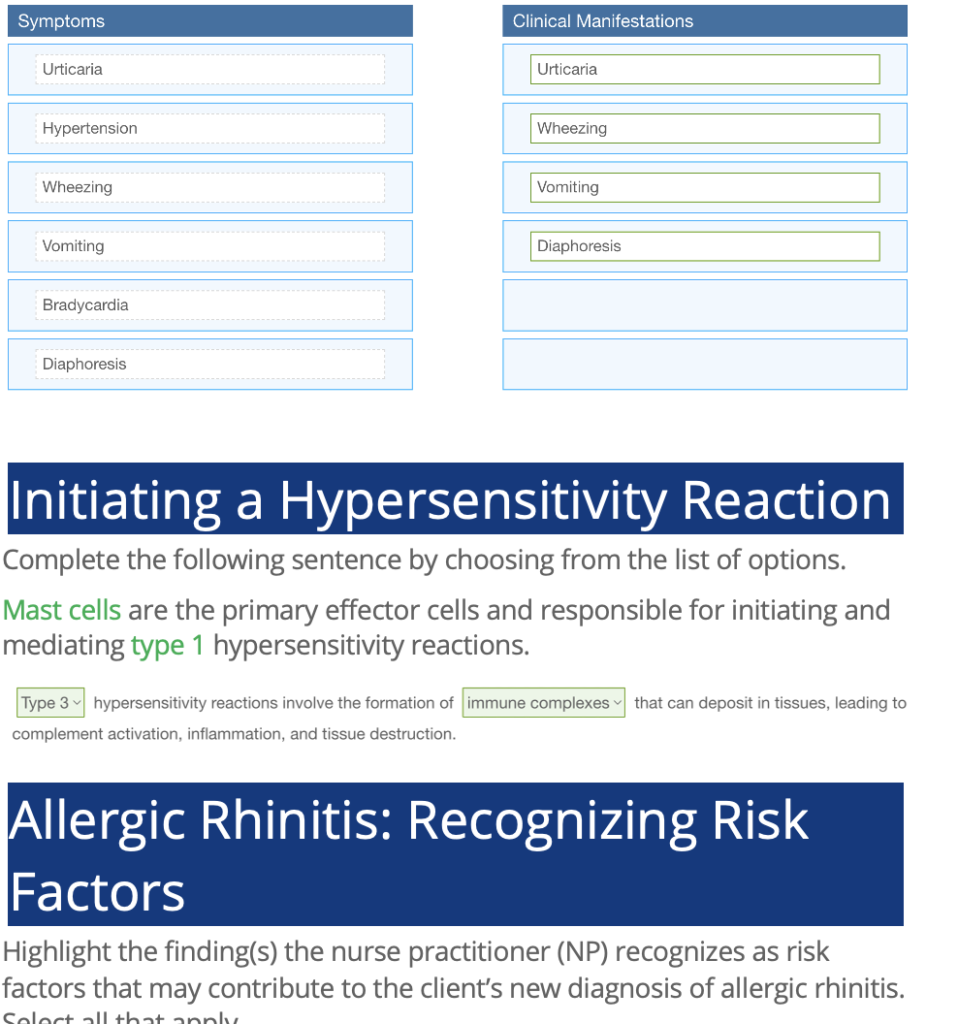
In a primary care office, a nurse practitioner (NP) assesses a client who reports taking a new medication 30 minutes before arrival. The NP is concerned that the client may be having a hypersensitivity reaction. Which clinical manifestations should the NP expect from the column on the left? Drag and drop expected symptoms of hypersensitivity reaction to the column on the right.
Pathophysiology of Graves’ Disease
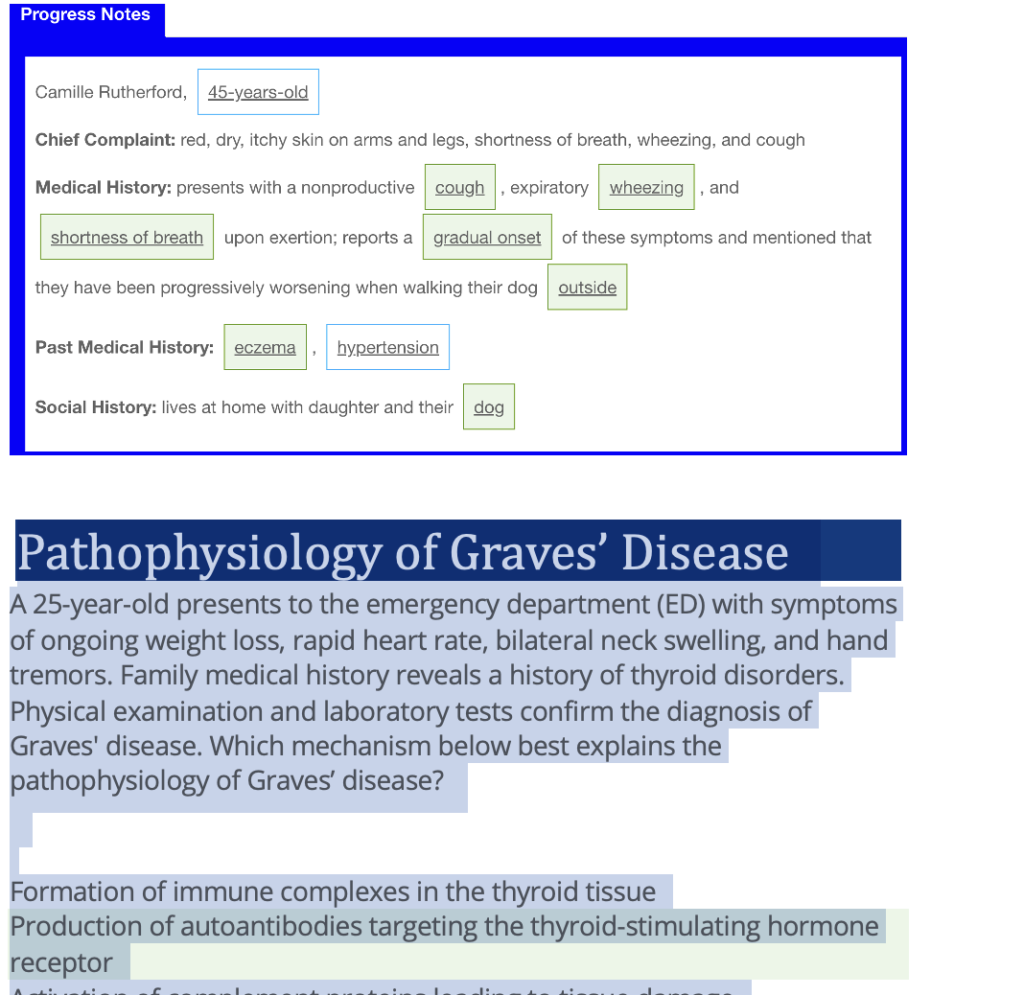
A 25-year-old presents to the emergency department (ED) with symptoms of ongoing weight loss, rapid heart rate, bilateral neck swelling, and hand tremors. Family medical history reveals a history of thyroid disorders. Physical examination and laboratory tests confirm the diagnosis of Graves’ disease. Which mechanism below best explains the pathophysiology of Graves’ disease?
Formation of immune complexes in the thyroid tissue
Production of autoantibodies targeting the thyroid-stimulating hormone receptor
Activation of complement proteins leading to tissue damage
Delayed-type hypersensitivity response in the thyroid gland
Type 3 Reaction Sequence in Order
Drag and drop the pathophysiological processes of a type 3 immune complex hypersensitivity into the correct order.
- Antibodies bind to antigens
- Immune complexes form
- Complexes deposit in blood vessels or tissues
- Activation of complement
- Inflammatory response at the site of deposit
- Release of lysosomal enzymes and chemical mediators
- Tissue damage
Poison Ivy Exposure
A client presented to the primary care office with a generalized rash and epidermal blistering from contact exposure to poison ivy two days ago. The nurse practitioner (NP) suspects a hypersensitivity reaction. What clinical manifestations should the NP consider to differentiate a type 1 hypersensitivity rash from a type 4 hypersensitivity rash?
A type 1 hypersensitivity rash often involves hives or urticaria, while a delayed onset, epidermal blistering rash characterizes a type 4 reaction.
A type 1 hypersensitivity rash is often localized and erythematous, whereas the rash in type 4 hypersensitivity is generalized and pruritic.
A type 1 hypersensitivity rash results from T-cell-mediated inflammation, whereas the rash in a type 4 hypersensitivity reaction is primarily due to the activation of mast cells.
A type 1 hypersensitivity rash is usually associated with contact dermatitis, while the rash in a type 4 hypersensitivity reaction is commonly seen in allergic reactions.
Type of Allergic Reaction
For each hypersensitivity reaction, click to specify which immunologic mechanism (type 1, 2, 3, 4) causes the clinical condition.
Solution: Edapt NR507 Week 1 Immune Response
Add to cart to get full solution
Related:(Completed) Edapt NR507 Week 2 Cardiovascular Disorders

Reviews
There are no reviews yet.