
Description
Shadow Health: HEENT History Tina Jones
Assignment Description: Assess the HEENT system of Tina Jones, a Digital Standardized Patient. Interview and examine the patient, document your findings, and complete post-exam activities. Students spend, on average, an hour and fifteen minutes on this assignment.
-
Estimated Time to Complete:60-80 minutes
-
Solution: Shadow Health: HEENT History Tina Jones
Category
Scored Items
Experts selected these topics as essential components of a strong, thorough interview with this patient.
Patient Data
Not Scored
A combination of open and closed questions will yield better patient data. The following details are facts of the patient’s case.
Relevant Medical History
Finding:
Asked about head problems
Finding:
Reports occasional headaches
(Found)
Pro Tip: Headaches can be caused a variety of ways, such as when sinus problems result in increased pressure buildup. Asking Tina if she gets headaches is soliciting information about possible symptoms that she experiences.Example Question:
Do you get headaches?
Finding:
Denies current headache
(Found)
Pro Tip: Assessing how a patient feels in the current moment can allow you to juxtapose their chief complaint alongside symptoms they experience. Asking Tina if she currently has a headache solicits information about how she is feeling now.Example Question:
Do you currently have a headache?
Finding:
Denies head problems other than headaches
(Available)
Pro Tip: Broad, open questions will allow Tina to describe, in her own words, any specific head conditions and symptoms that she is experiencing.Example Question:
Other than headaches, are you experiencing head problems?
Finding:
Asked about frequency of headaches
Finding:
Reports headaches occur once a week
(Found)
Pro Tip: Establishing a timeline for how often Tina gets headaches will illustrate how long she has been suffering these particular symptoms and might indicate possible triggers.Example Question:
How frequently do your headaches occur?
Finding:
Asked about duration of headaches
Finding:
Reports headaches last a few hours
(Available)
Pro Tip: Establishing a timeline for how long Tina’s headaches last will illustrate how long she has been suffering these particular symptoms and might indicate possible triggers.Example Question:
How long do your headaches last?
Finding:
Asked about character and location of headaches
Finding:
Reports headaches as tight and throbbing
(Found)
Pro Tip: Specifying what the pain feels like can narrow and define the type of headache Tina is experiencing. Soliciting this information allows you to more accurately treat her symptoms.Example Question:
What do your headaches feel like?
Finding:
Reports headache located behind her eyes
(Found)
Pro Tip: Specifying the location of Tina’s pain can narrow and define where Tina’s pain is occurring. Soliciting this information allows you to more accurately treat her symptoms.Example Question:
Where do you feel your headaches?
Finding:
Asked to rate headache pain on a scale
Finding:
Reports headaches as a 2/10 or 3/10
(Found)
Pro Tip: Pain severity might change for a variety of reasons. Asking Tina to rate the severity of her pain on a scale of 1-10 will provide a quantified and relative measurement of her condition.Example Question:
On a scale of 1 to 10, how bad are your headaches?
Finding:
Asked about headache treatment
Finding:
Reports treating headaches with acetaminophen (Tylenol)
(Found)
Pro Tip: Tina’s response to a question about managing her headaches will reveal the severity of her symptoms, her health literacy, and the way she’s complied with previous treatment plans.Example Question:
Do you take anything to treat your headaches?
Finding:
Reports resting to treat headache
(Available)
Pro Tip: Tina’s response to a question about managing her headaches will reveal the severity of her symptoms, her health literacy, and the way she’s complied with previous treatment plans.Example Question:
Do you do anything to treat your headaches?
Finding:
Reports acetaminophen (Tylenol) and rest usually resolve symptoms
(Found)
Pro Tip: Tina’s response to a question about managing her headaches will reveal the severity of her symptoms, her health literacy, and the way she’s complied with previous treatment plans.Example Question:
What helps with your headaches?
Finding:
Asked about headache triggers
Finding:
Reports headaches only happen when reading or studying
(Found)
Pro Tip: Soliciting information about possible headache triggers will allow Tina to consider what, if any, activities, weather patterns, movements, or sensory input is correlated with her headaches.Example Question:
When do you get headaches?
Finding:
Reports that blurry vision and headaches often coincide
(Available)
Pro Tip: Soliciting information about whether Tina’s headaches coincide with her blurry vision will allow you to consider whether the two are related and how then to customize treatment.Example Question:
Do your headaches coincide with your blurry vision?
Finding:
Asked about vision
Finding:
Reports occasional blurry vision
(Found)
Pro Tip: Broad, open questions will allow Tina to describe, in her own words, any specific vision conditions and symptoms that she is experiencing.Example Question:
Have you been having problems with your vision?
Finding:
Asked about onset and frequency of blurry vision
Finding:
Reports worsening vision began within the past year
(Found)
Pro Tip: Establishing a timeline of when Tina’s blurry vision has been worsening will illustrate how long she has been suffering these particular symptoms and might indicate possible triggers.Example Question:
When did your vision begin worsening?
Finding:
Reports blurry vision only occurs when reading for long periods
(Available)
Pro Tip: Establishing a timeline of Tina’s blurry vision will illustrate how long she has been suffering these particular symptoms and might indicate possible triggers.Example Question:
When does your blurry vision occur?
Finding:
Reports noticing blurry vision increasing in the past few months
(Available)
Pro Tip: Establishing a timeline of Tina’s blurry vision will illustrate how long she has been suffering these particular symptoms and might indicate possible triggers.Example Question:
Have you been getting blurry vision more often?
Finding:
Asked about relieving factors for blurry vision
Finding:
Reports that resting eyes helps
(Found)
Pro Tip: Tina’s response to a question about recent vision management will reveal the severity of her symptoms, her health literacy, and the way she’s complied with previous treatment plans.Example Question:
What makes your blurry vision go away?
Finding:
Asked about vision care
Finding:
Reports last vision exam was in childhood
(Found)
Pro Tip: Asking Tina when her last vision test was will indicate the degree to which she’s seen her vision as something that has needed medical attention.Example Question:
When was your last vision exam?
Finding:
Denies use of corrective lenses
(Available)
Pro Tip: Corrective lenses might indicate a recent change in vision. Asking Tina whether she has glasses or contacts solicits information about her vision history.Example Question:
Do you use corrective lenses?
Finding:
Asked about additional eye problems
Finding:
Reports occasional itchy eyes
(Found)
Pro Tip: Environmental factors can often be primary allergy triggers. Asking whether Tina’s eyes itch can reveal one such trigger.Example Question:
Does your cat allergy make your eyes itch?
Finding:
Reports occasional eye redness
(Found)
Pro Tip: Environmental factors can often be primary allergy triggers. Asking whether Tina’s eyes become red can reveal one such trigger.Example Question:
Do you have eye redness?
Finding:
Denies eye pain
(Available)
Pro Tip: Sinusitis can create pressure behind the eyes, causing eye pain. Asking Tina whether she is experiencing eye pain solicits information about possible symptoms.Example Question:
Do you have eye pain?
Finding:
Denies eye dryness
(Found)
Pro Tip: Dry eyes occur when the eyes do not produce enough tears to lubricate them. Asking Tina if she has dry eyes solicits information about one particular symptom.Example Question:
Do you have eye dryness?
Finding:
Asked about triggers for eye symptoms
Finding:
Reports cat allergy is a trigger for itchy eyes
(Found)
Pro Tip: Discerning what’s making Tina’s eyes itch can point to possible triggers like environmental factors, bodily positions, or movements that may have a bearing on Tina’s breathing.Example Question:
Does being around cats make your eyes itch?
Finding:
Reports dust is a trigger for itchy eyes
(Found)
Pro Tip: Discerning what’s making Tina’s eyes itch can point to possible triggers like environmental factors, bodily positions, or movements that may have a bearing on Tina’s breathing.Example Question:
Does dust make your eyes itch?
Finding:
Asked about treatment of eye symptoms
Finding:
Denies taking medication for itchy eyes
(Found)
Pro Tip: Tina’s response to a question about managing her itchy eyes will reveal the severity of her symptoms, her health literacy, and the way she’s complied with previous treatment plans.Example Question:
Are you taking medication for your itchy eyes?
Finding:
Asked about nasal problems
Finding:
Reports occasional runny nose
(Found)
Pro Tip: Infected sinuses can manifest as nose problems. Asking Tina about her nasal symptoms solicits information about her sinuses and possible sinus problems.Example Question:
Do you have general nose problems?
Finding:
Denies nosebleeds
(Available)
Pro Tip: Nosebleeds are often caused by sinusitis. Asking Tina if she ever gets nosebleeds solicits information about her medical history.Example Question:
Have you had nosebleeds?
Finding:
Asked about sinus problems
Finding:
Denies frequent sinus problems
(Found)
Pro Tip: Infected sinuses can manifest as nose problems. Asking Tina about her nasal symptoms solicits information about her sinuses and possible sinus problems.Example Question:
Do you have frequent sinus congestion?
Finding:
Followed up on trigger of nasal problem
Finding:
Reports cat allergy is trigger for runny nose
(Found)
Pro Tip: Follow-up questions will enable Tina to more fully and specifically describe her condition, experience, or symptoms.Example Question:
Do your allergies trigger your runny nose?
Finding:
Followed up on treatment of nasal problem
Finding:
Denies taking medication for runny nose
(Found)
Pro Tip: Tina’s response to a question about runny nose medication will reveal the severity of her symptoms, her health literacy, and the way she’s complied with previous treatment plans.Example Question:
Are you taking any medication for your runny nose?
Finding:
Reports treatment is avoiding trigger
(Found)
Pro Tip: Tina’s response to a question about managing her runny nose will reveal the severity of her symptoms, her health literacy, and the way she’s complied with previous treatment plans.Example Question:
How have you been treating your runny nose?
Finding:
Reports treatment is showering
(Found)
Pro Tip: Tina’s response to a question about managing her runny nose will reveal the severity of her symptoms, her health literacy, and the way she’s complied with previous treatment plans.Example Question:
How have you been treating your runny nose?
Finding:
Asked about current nasal problems
Finding:
Denies current runny nose
(Found)
Pro Tip: Initially establishing a chief complaint allows the patient to express their reason for seeking care, primary concerns, or condition they are presenting with.Example Question:
Do you have a runny nose right now?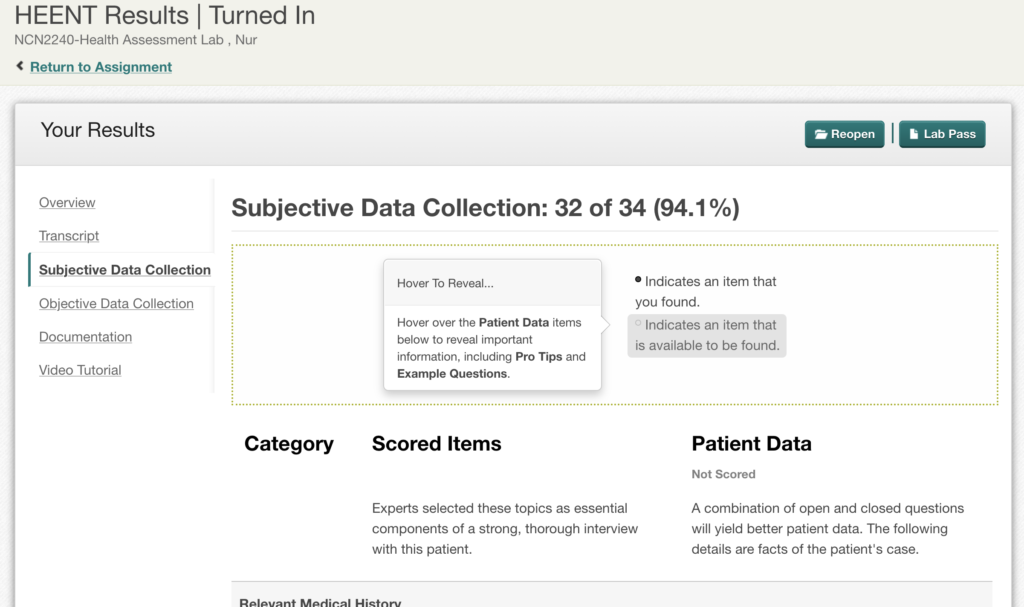
Add to cart to get both subjective and objective data

Reviews
There are no reviews yet.