
Description
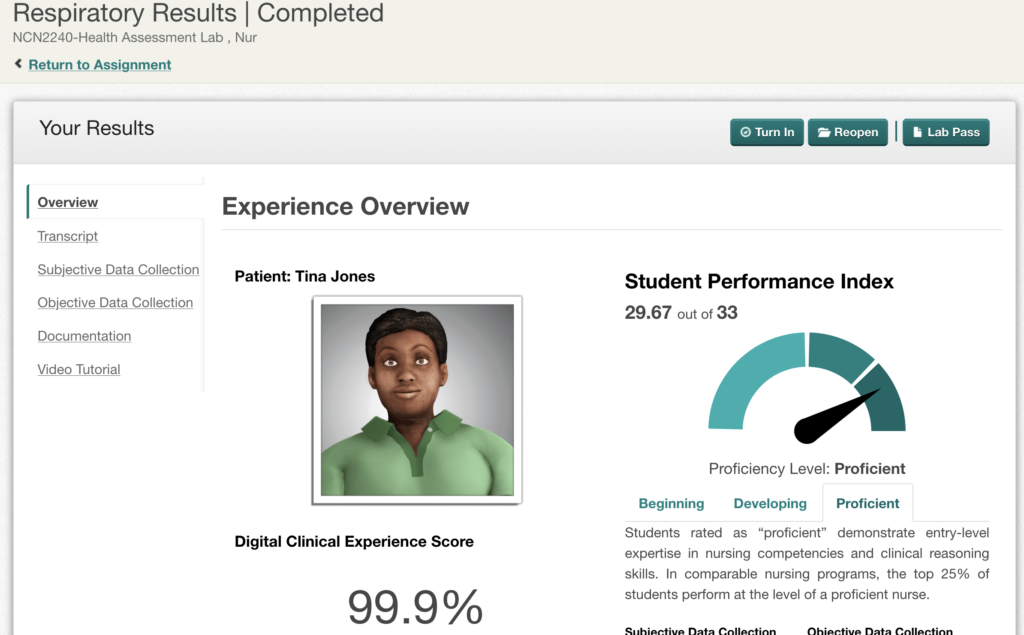
Shadow Health: Respiratory Tina Jones
Assignment Description: Assess the Respiratory system of Tina Jones, a Digital Standardized Patient. Interview and examine the patient, document your findings, and complete post-exam activities. Students spend, on average, an hour and fifteen minutes on this assignment.
-
Estimated Time to Complete:45-65 minutes
-
Solution: Shadow Health: Respiratory Tina Jones
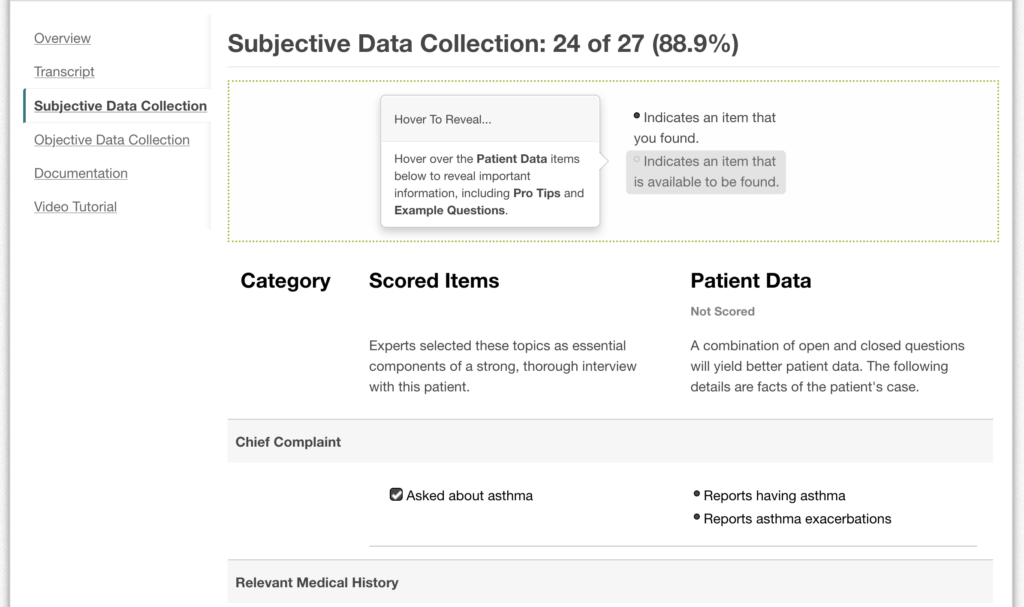
Category
Scored Items
Experts selected these topics as essential components of a strong, thorough interview with this patient.
Patient Data
Not Scored
A combination of open and closed questions will yield better patient data. The following details are facts of the patient’s case.
Chief Complaint
Finding:
Asked about asthma
Finding:
Reports having asthma
(Found)
Pro Tip: Asking whether Tina has had asthma will elicit information regarding any previous respiratory diagnosis.Example Question:
Do you have asthma?
Finding:
Reports asthma exacerbations
(Found)
Pro Tip: Initially establishing a chief complaint allows the patient to express their reason for seeking care, primary concerns, or condition they are presenting with.Example Question:
Do you have asthma attacks?
Relevant Medical History
Finding:
Asked about severity of asthma
Finding:
Reports asthma is intermittent
(Found)
Pro Tip: Establishing the severity classification of Tina’s asthma is important for understanding the impact on her life and the functioning of her respiratory system, as well as assessing the appropriateness of her medication.Example Question:
What is the severity of your asthma?
Finding:
Asked about asthma frequency and duration
Finding:
Reports asthma exacerbations occur up to 2 times a week
(Found)
Pro Tip: Establishing a timeline for how often Tina’s asthma attacks occur will help in treatment and in understanding the severity of her asthma.Example Question:
How many times a week do you have an asthma attack?
Finding:
Reports asthma exacerbations last around five minutes
(Available)
Pro Tip: Establishing a timeline for how long Tina’s asthma attacks last will help in treatment and in understanding the severity of her asthma.Example Question:
How long do your asthma attacks last?
Finding:
Asked about most recent asthma exacerbation
Finding:
Reports last exacerbation was three days ago
(Found)
Pro Tip: Establishing a timeline for Tina’s asthma attacks will help in treatment and in understanding the severity of her asthma.Example Question:
When is the last time you had an asthma attack?
Finding:
Reports last exacerbation around cats at cousin’s house
(Found)
Pro Tip: Questions about what factors might have caused an illness can point to a patient’s environmental stressors, habits, and general wellbeing. Asking Tina what caused her asthma attacks might indicate her health literacy and understanding of what factors impact her breathing.Example Question:
What caused your last asthma attack?
Finding:
Asked about asthma triggers
Finding:
Reports cat allergy as asthma trigger
(Found)
Pro Tip: Environmental factors can often be primary allergy triggers. Asking whether Tina has a cat allergy can reveal one such trigger.Example Question:
Do cats trigger your asthma?
Finding:
Reports dust as asthma trigger
(Found)
Pro Tip: Environmental factors can often be primary allergy triggers. Asking whether Tina has a dust allergy can reveal one such trigger.Example Question:
Does dust trigger your asthma?
Finding:
Denies asthma problems at work
(Available)
Pro Tip: Environmental factors at home or work can often be primary allergy triggers. Asking Tina about possible allergens at work might indicate a relevant factor in her recent exacerbation.Example Question:
Does anything at work make your asthma worse?
Finding:
Denies asthma problems at home
(Available)
Pro Tip: Environmental factors at home or work can often be primary allergy triggers. Asking Tina about possible allergens at home might indicate a relevant factor in her recent exacerbation.Example Question:
Have you had problems with your asthma at home?
Finding:
Asked about asthma management
Finding:
Reports inhaler
(Found)
Pro Tip: Tina’s response to a question about asthma management will reveal the severity of her symptoms, her health literacy, and the way she’s complied with previous treatment plans.Example Question:
How do you manage your asthma?
Finding:
Asked about asthma medication
Finding:
Reports albuterol inhaler (Proventil)
(Found)
Pro Tip: The medication that a patient takes reveals a current treatment plan and healthcare access. Asking Tina what medication she takes for her asthma will indicate her treatment plan and the degree to which she complies with it.Example Question:
What is the name of the inhaler you are currently using?
Finding:
Reports last inhaler use was three days ago
(Available)
Pro Tip: Soliciting a shallow history of a patient’s medication history can reveal recent exacerbation. Asking Tina when she last used her inhaler will indicate when her symptoms most recently required medical treatment.Example Question:
When did you last use your inhaler?
Finding:
Reports using inhaler no more than 2 times per week
(Available)
Pro Tip: After an asthma exacerbation, patients often will become more reliant on medical tools like inhalers. Asking Tina how many times a week she uses her inhaler will point to the severity of her recent exacerbation.Example Question:
How many times a week are you using your inhaler?
Finding:
Asked about number of puffs when using asthma inhaler
Finding:
Reports recommended dose is 1-3 puffs as needed
(Available)
Pro Tip: Tina’s response to a question about asthma medicine dosing will reveal the severity of her symptoms, her health literacy, and the way she’s complied with her treatment plans.Example Question:
What is the recommended dose of your asthma medication?
Finding:
Reports typically taking 2 puffs
(Available)
Pro Tip: Tina’s response to a question about asthma medicine dosing will reveal the severity of her symptoms, her health literacy, and the way she’s complied with her treatment plans.Example Question:
How many puffs do you normally take?
Finding:
Reports sometimes needing 3 puffs to control symptoms
(Available)
Pro Tip: Tina’s response to a question about asthma medicine dosing will reveal the severity of her symptoms, her health literacy, and the way she’s complied with her treatment plans.Example Question:
What is the most puffs you ever take?
Finding:
Asked about exacerbation symptoms
Finding:
Reports chest tightness during exacerbation
(Found)
Pro Tip: Asthma exacerbation can result in increased wheezing, shortness of breath, and chest tightness. Asking if Tina’s had chest tightness since exacerbation can indicate the severity of her symptoms since exacerbation.Example Question:
Have you had chest tightness?
Finding:
Reports wheezing during exacerbation
(Available)
Pro Tip: Some people who experience chronic asthma may be accustomed to wheezing and, as a result, might not volunteer this information. Asking Tina if she’s been wheezing illustrates how her asthma is presenting.Example Question:
Have you been wheezing?
Finding:
Reports shortness of breath during exacerbation
(Found)
Pro Tip: Symptoms often vary from patient to patient. Asking Tina whether she experiences shortness of breath during an attack will indicate how her individual symptoms manifest.Example Question:
Do you have shortness of breath during an asthma attack?
Finding:
Denies coughing during exacerbation
(Available)
Pro Tip: Symptoms often vary from patient to patient. Asking Tina whether she experiences coughing during an attack will indicate how her individual symptoms manifest.Example Question:
Do you cough during an asthma attack?
Finding:
Denies chest pain during exacerbation
(Found)
Pro Tip: Symptoms often vary from patient to patient. Asking Tina whether she experiences chest pain during an attack will indicate how her individual symptoms manifest.Example Question:
Do you have chest pains when you have asthma attacks?
Finding:
Denies painful breathing
(Available)
Pro Tip: Symptoms often vary from patient to patient. Asking Tina whether she experiences painful breathing during an attack will indicate how her individual symptoms manifest.Example Question:
Is it painful for you to breathe?
Finding:
Asked about current breathing
-
Finding:
Denies current breathing problems
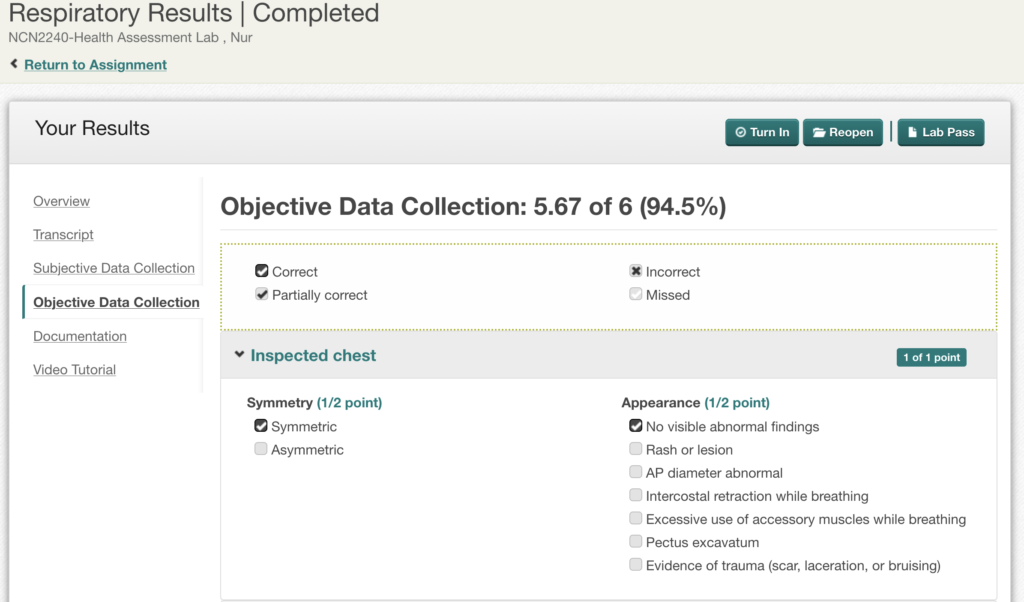
Click add to cart to get both Subjective and Objective data completed
Related: (Completed) Shadow Health: Cardiovascular Tina Jones

Reviews
There are no reviews yet.