
Description
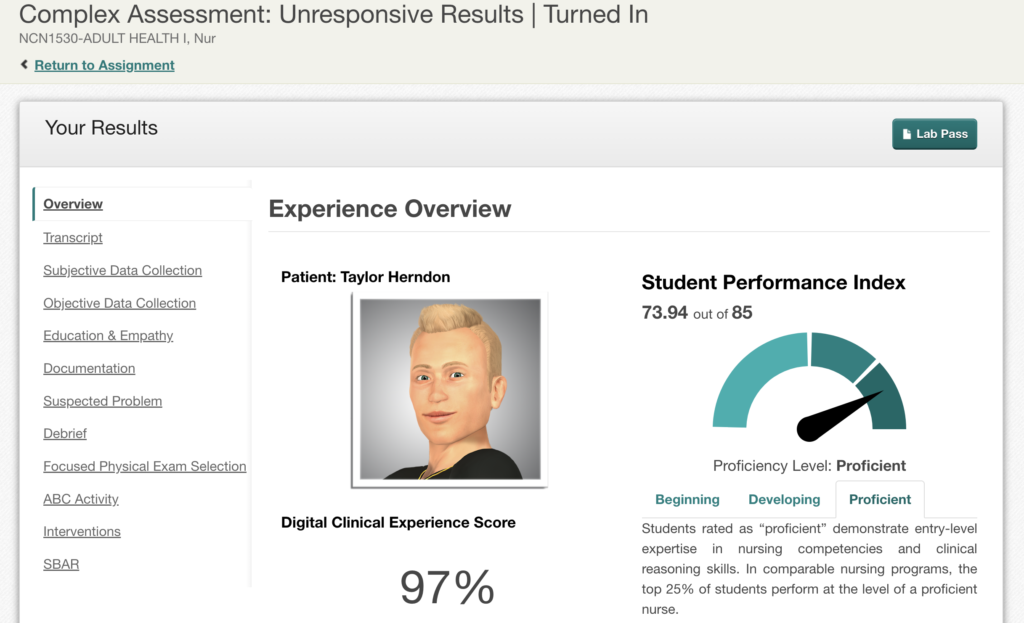
Shadow Health: Complex Assessment: Unresponsive Taylor Herndon
Assignment Description: This assignment provides the opportunity to conduct a focused assessment with a patient in an emergency department setting. You will interview and examine the patient, document your findings, formulate a suspected diagnosis, and complete an interprofessional SBAR. On average, this assignment should take 60 minutes to complete. This assignment may contain synthesized voices.
-
Estimated Time to Complete: 60 minutes
-
Patient Exam This assignment provides the opportunity to conduct a focused assessment with a patient in an emergency department setting. You will interview and examine the patient, document your findings, formulate a suspected diagnosis, and complete an interprofessional SBAR. On average, this assignment should take 60 minutes to complete.
Solution:Shadow Health: Complex Assessment: Unresponsive Taylor Herndon
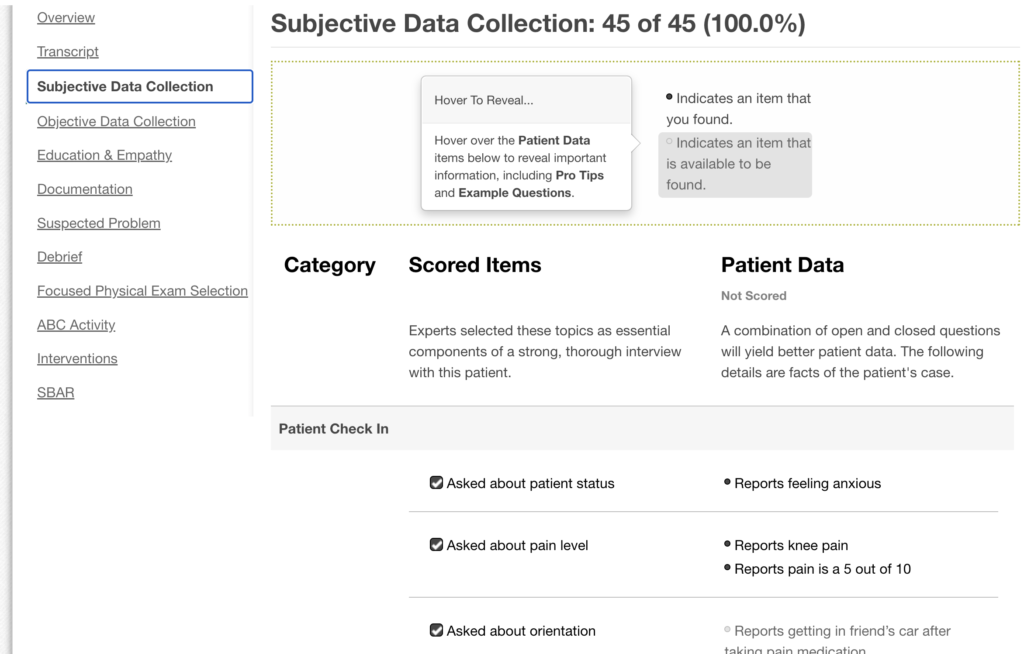
Category
Scored Items
Experts selected these topics as essential components of a strong, thorough interview with this patient.
Patient Data
Not Scored
A combination of open and closed questions will yield better patient data. The following details are facts of the patient’s case.
Patient Check In
Finding:
Asked about patient status
Finding:
Reports feeling anxious
(Found)
Pro Tip: By asking a patient an open question about their status, you can establish their current medical and comfort needs and assist in coordinating their care.Example Question:
How are you feeling?
Finding:
Asked about pain level
Finding:
Reports knee pain
(Found)
Pro Tip: By asking a patient an open question about their status, you can establish their current medical and comfort needs and assist in coordinating their care.Example Question:
Are you in any pain?
Finding:
Reports pain is a 5 out of 10
(Found)
Pro Tip: By asking a patient an open question about their status, you can establish their current medical and comfort needs and assist in coordinating their care.Example Question:
Can you rate your pain on a scale of 1 to 10?
Finding:
Asked about orientation
Finding:
Reports getting in friend’s car after taking pain medication
(Available)
Pro Tip: Asking a patient to orient themselves in time and space will help you assess their current condition and determine if any immediate interventions would be required.Example Question:
What is the last thing you remember?
Finding:
Oriented to place
(Found)
Pro Tip: Asking a patient to orient themselves in time and space will help you assess their current condition and determine if any immediate interventions would be required.Example Question:
Do you know where you are?
Finding:
Oriented to time
(Available)
Pro Tip: Asking a patient to orient themselves in time and space will help you assess their current condition and determine if any immediate interventions would be required.Example Question:
Do you know what time it is?
Finding:
Oriented to person
(Available)
Pro Tip: Asking a patient to orient themselves in time and space will help you assess their current condition and determine if any immediate interventions would be required.Example Question:
What is your name?
Finding:
Oriented to situation
(Available)
Pro Tip: Asking a patient to orient themselves in time and space will help you assess their current condition and determine if any immediate interventions would be required.Example Question:
Do you know why you are here?
History of Present Illness
Finding:
Asked about onset of symptoms
Finding:
Reports knee pain started about 3 months ago
(Found)
Pro Tip: If a patient reveals a medical condition or symptoms they have, it is important to ask a wide variety of follow-up questions about the history of the present illness. This can help providers better understand the nature of the disorder, especially through questions about timing, severity, and types of symptoms.Example Question:
When did your symptoms begin?
Finding:
Asked about location of symptoms
Finding:
Reports pain in right knee
(Found)
Pro Tip: If a patient reveals a medical condition or symptoms they have, it is important to ask a wide variety of follow-up questions about the history of the present illness. This can help providers better understand the nature of the disorder, especially through questions about timing, severity, and types of symptoms.Example Question:
Where are your symptoms located?
Finding:
Asked about aggravating factors
Finding:
Reports stress makes pain worse
(Found)
Pro Tip: If a patient reveals a medical condition or symptoms they have, it is important to ask a wide variety of follow-up questions about the history of the present illness. This can help providers better understand the nature of the disorder, especially through questions about timing, severity, and types of symptoms.Example Question:
Does anything aggravate your symptoms?
Finding:
Asked about relieving factors
Finding:
Reports pain medication is the only thing that helps
(Found)
Pro Tip: If a patient reveals a medical condition or symptoms they have, it is important to ask a wide variety of follow-up questions about the history of the present illness. This can help providers better understand the nature of the disorder, especially through questions about timing, severity, and types of symptoms.Example Question:
Does anything relieve your symptoms?
Finding:
Asked about timing of symptoms
Finding:
Reports pain is constant
(Found)
Pro Tip: If a patient reveals a medical condition or symptoms they have, it is important to ask a wide variety of follow-up questions about the history of the present illness. This can help providers better understand the nature of the disorder, especially through questions about timing, severity, and types of symptoms.Example Question:
When do your symptoms occur?
Past Medical History
Finding:
Asked about existing health conditions
Finding:
Denies existing health conditions
(Found)
Pro Tip: A patient’s past medical history includes their health conditions, what preventative and maintenance treatments they have received, and any previous medical interventions they have received. Asking about a patient’s medical history helps you contextualize their current health for proper assessment.Example Question:
Do you have any existing health conditions?
Finding:
Asked about allergies
Finding:
Denies food allergies
(Found)
Pro Tip: A patient’s past medical history includes their health conditions, what preventative and maintenance treatments they have received, and any previous medical interventions they have received. Asking about a patient’s medical history helps you contextualize their current health for proper assessment.Example Question:
Do you have any food allergies?
Finding:
Denies environmental allergies
(Found)
Pro Tip: A patient’s past medical history includes their health conditions, what preventative and maintenance treatments they have received, and any previous medical interventions they have received. Asking about a patient’s medical history helps you contextualize their current health for proper assessment.Example Question:
Do you have any environmental allergies?
Finding:
Denies latex allergy
(Found)
Pro Tip: A patient’s past medical history includes their health conditions, what preventative and maintenance treatments they have received, and any previous medical interventions they have received. Asking about a patient’s medical history helps you contextualize their current health for proper assessment.Example Question:
Do you have any latex allergies?
Finding:
Asked specifically about medication allergies
Finding:
Denies medication allergies
(Found)
Pro Tip: A patient’s past medical history includes their health conditions, what preventative and maintenance treatments they have received, and any previous medical interventions they have received. Asking about a patient’s medical history helps you contextualize their current health for proper assessment.Example Question:
Do you have any medication allergies?
Finding:
Asked about hospitalizations
Finding:
Reports hospitalization for torn ACL and MCL
(Found)
Pro Tip: A patient’s past medical history includes their health conditions, what preventative and maintenance treatments they have received, and any previous medical interventions they have received. Asking about a patient’s medical history helps you contextualize their current health for proper assessment.Example Question:
Have you ever been hospitalized?
Finding:
Reports recent knee surgery for torn ACL and MCL
(Found)
Pro Tip: A patient’s past medical history includes their health conditions, what preventative and maintenance treatments they have received, and any previous medical interventions they have received. Asking about a patient’s medical history helps you contextualize their current health for proper assessment.Example Question:
Have you had any surgeries?
Finding:
Followed up on hospitalization
Finding:
Reports hospitalization occurred 3 months ago
(Found)
Pro Tip: A patient’s past medical history includes their health conditions, what preventative and maintenance treatments they have received, and any previous medical interventions they have received. Asking about a patient’s medical history helps you contextualize their current health for proper assessment.Example Question:
When were you hospitalized?
Finding:
Reports hospital prescribed oxycodone/acetaminophen
(Found)
Pro Tip: A patient’s past medical history includes their health conditions, what preventative and maintenance treatments they have received, and any previous medical interventions they have received. Asking about a patient’s medical history helps you contextualize their current health for proper assessment.Example Question:
What treatment did you receive?
Home Medications
Finding:
Asked about home medications
Finding:
Reports taking pain medication
(Found)
Pro Tip: Asking about a patient’s home medications gives you information on the nature of their health conditions and how effectively they are being managed. This helps determine the need for you to adjust the patient’s treatments or medication regimen.Example Question:
Do you take any medications?
Finding:
Followed up on medication for pain
Finding:
Reports medication is oxycodone/acetaminophen 5 mg/325 mg
(Found)
Pro Tip: Asking about a patient’s home medications gives you information on the nature of their health conditions and how effectively they are being managed. This helps determine the need for you to adjust the patient’s treatments or medication regimen.Example Question:
What dose is your medication?
Finding:
Reports pain medication is effective
(Found)
Pro Tip: Asking about a patient’s home medications gives you information on the nature of their health conditions and how effectively they are being managed. This helps determine the need for you to adjust the patient’s treatments or medication regimen.Example Question:
Is your medication effective?
Finding:
Reports adverse effects
(Available)
Pro Tip: Asking about a patient’s home medications gives you information on the nature of their health conditions and how effectively they are being managed. This helps determine the need for you to adjust the patient’s treatments or medication regimen.Example Question:
Does your medication cause any adverse effects?
Finding:
Reports taking every 4 hours
(Available)
Pro Tip: Asking about a patient’s home medications gives you information on the nature of their health conditions and how effectively they are being managed. This helps determine the need for you to adjust the patient’s treatments or medication regimen.Example Question:
How often do you take your medication?
Finding:
Reports taking in pill form
(Found)
Pro Tip: Asking about a patient’s home medications gives you information on the nature of their health conditions and how effectively they are being managed. This helps determine the need for you to adjust the patient’s treatments or medication regimen.Example Question:
How do you take your medication?
Finding:
Asked about medication regimen adherence
Finding:
Reports taking pain medication without a prescription
(Found)
Pro Tip: Asking about a patient’s home medications gives you information on the nature of their health conditions and how effectively they are being managed. This helps determine the need for you to adjust the patient’s treatments or medication regimen.Example Question:
Do you take your medication as prescribed?
Finding:
Reports taking more pain medication than prescribed
(Available)
Pro Tip: Asking about a patient’s home medications gives you information on the nature of their health conditions and how effectively they are being managed. This helps determine the need for you to adjust the patient’s treatments or medication regimen.Example Question:
Do you take your medication as prescribed?
Finding:
Asked about last dose of medication
Finding:
Reports taking last dose 30 minutes ago
(Found)
Pro Tip: Asking about a patient’s home medications gives you information on the nature of their health conditions and how effectively they are being managed. This helps determine the need for you to adjust the patient’s treatments or medication regimen.Example Question:
When did you take the last dose of your medication?
Finding:
Asked about vitamins and supplements
Finding:
Denies taking vitamins
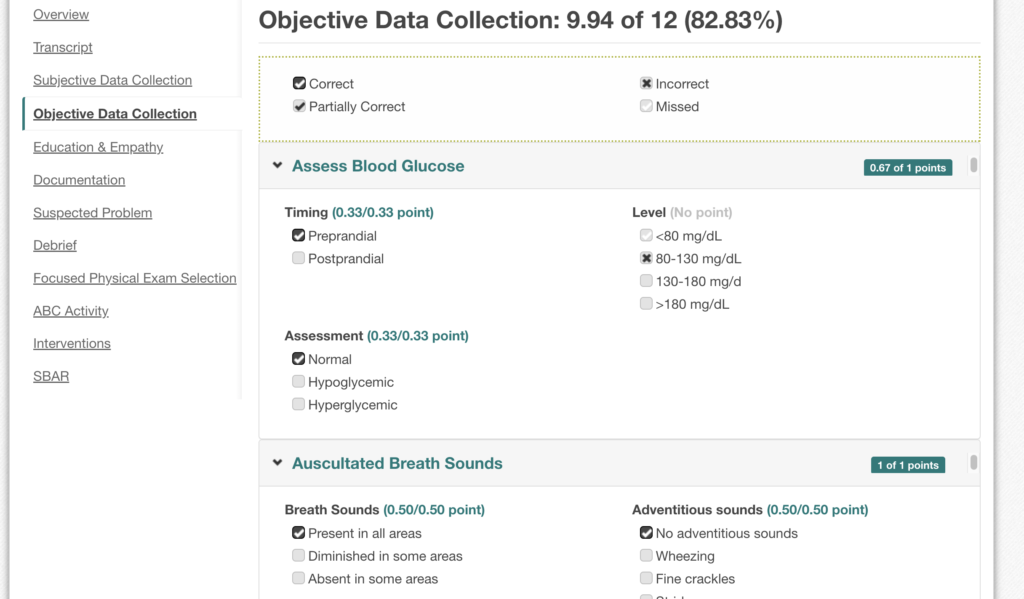
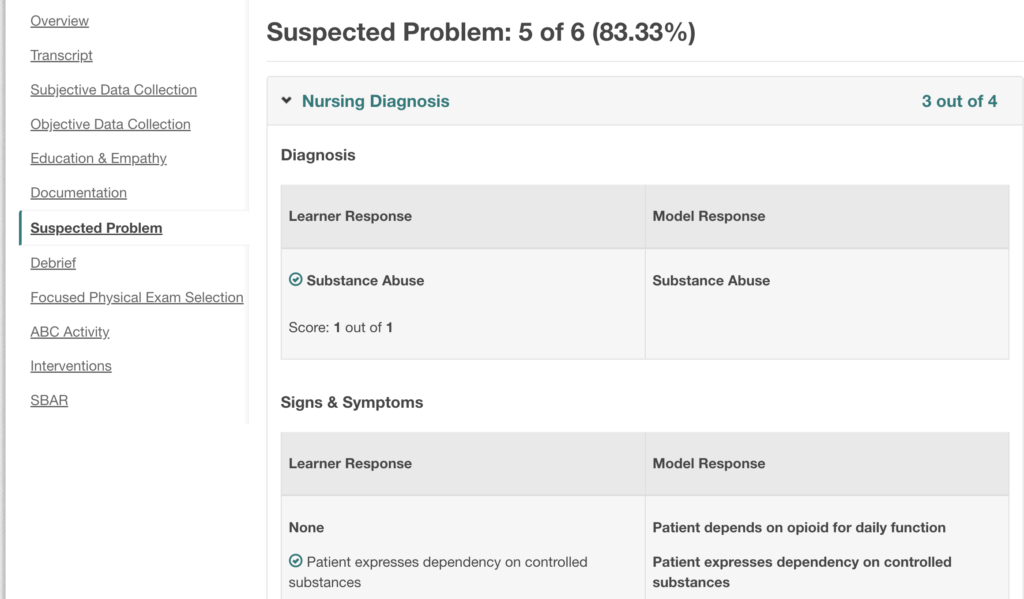
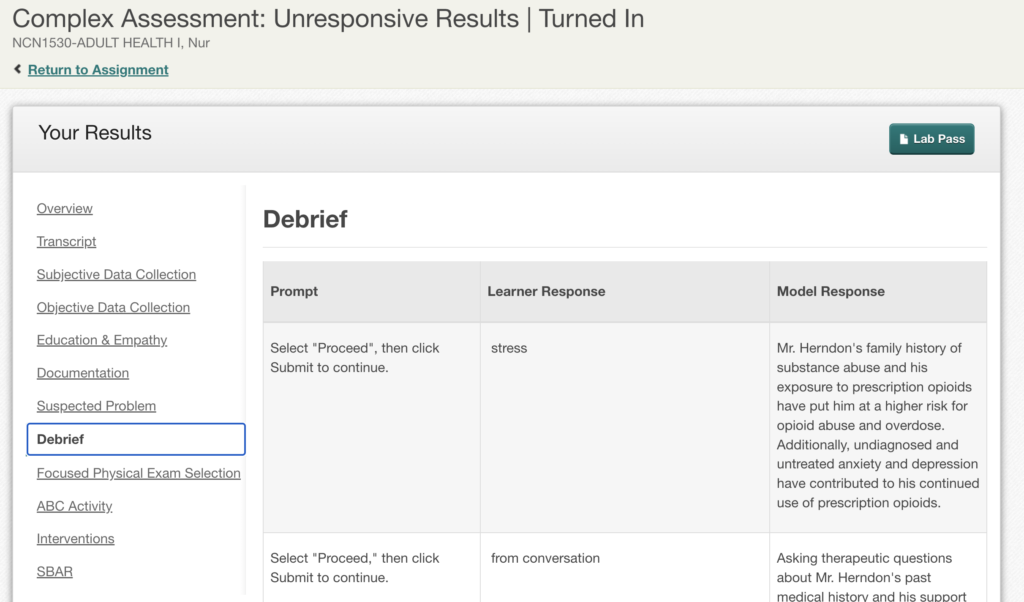
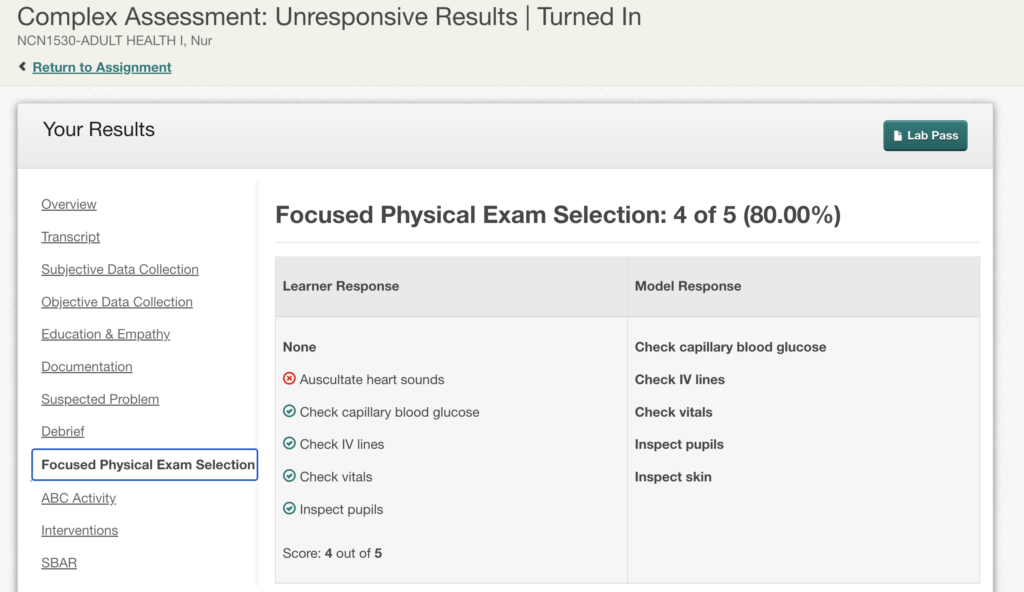
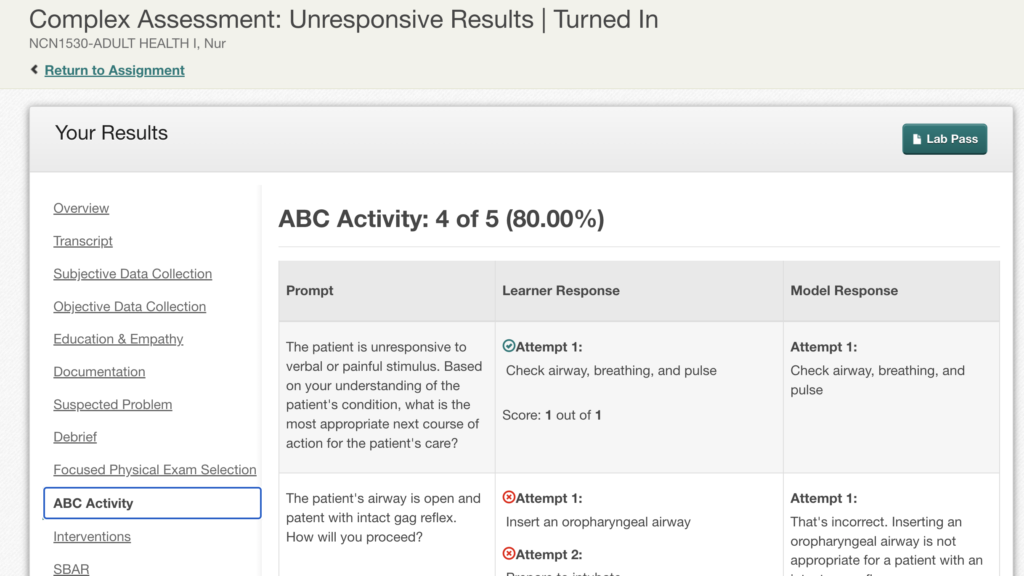
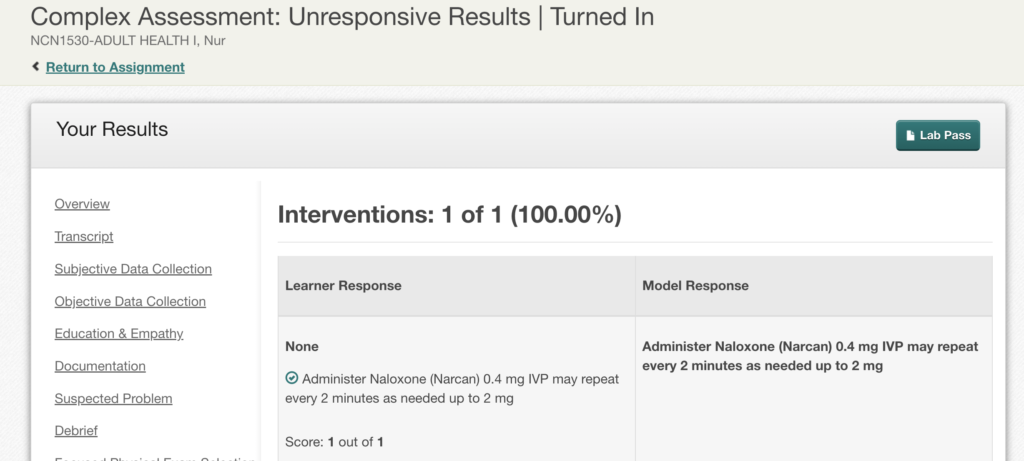
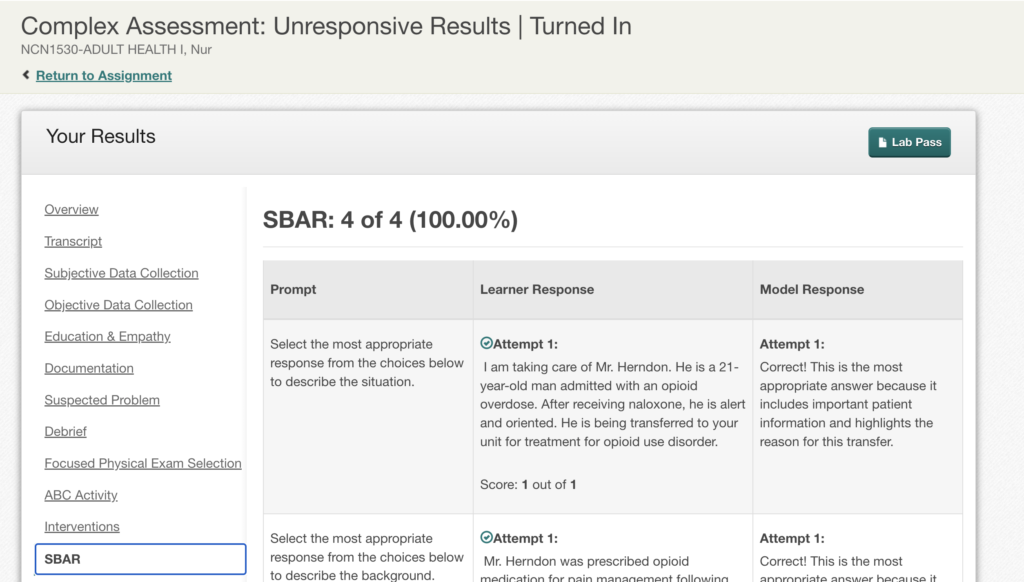
Add to cart to get objective data, subjective data, suspected problem, debrief, focused physical exam selection, ABC activity, intervention, and SBAR
Related:(Completed) Shadow Health:Complex Assessment: End Stage Heart Failure Vandana Kumar

Reviews
There are no reviews yet.