
Description
Shadow Health: Patient Care Rounds: Complex Postoperative Care Sonia Best
Assignment Description: In this assignment, learners will conduct safety and privacy actions, assess a patient after a complex operation, gather subjective and objective data, and apply interventions based on data collected.
-
Estimated Time to Complete: 45-60 minutes
-
Solution: Shadow Health: Patient Care Rounds: Complex Postoperative Care Sonia Best
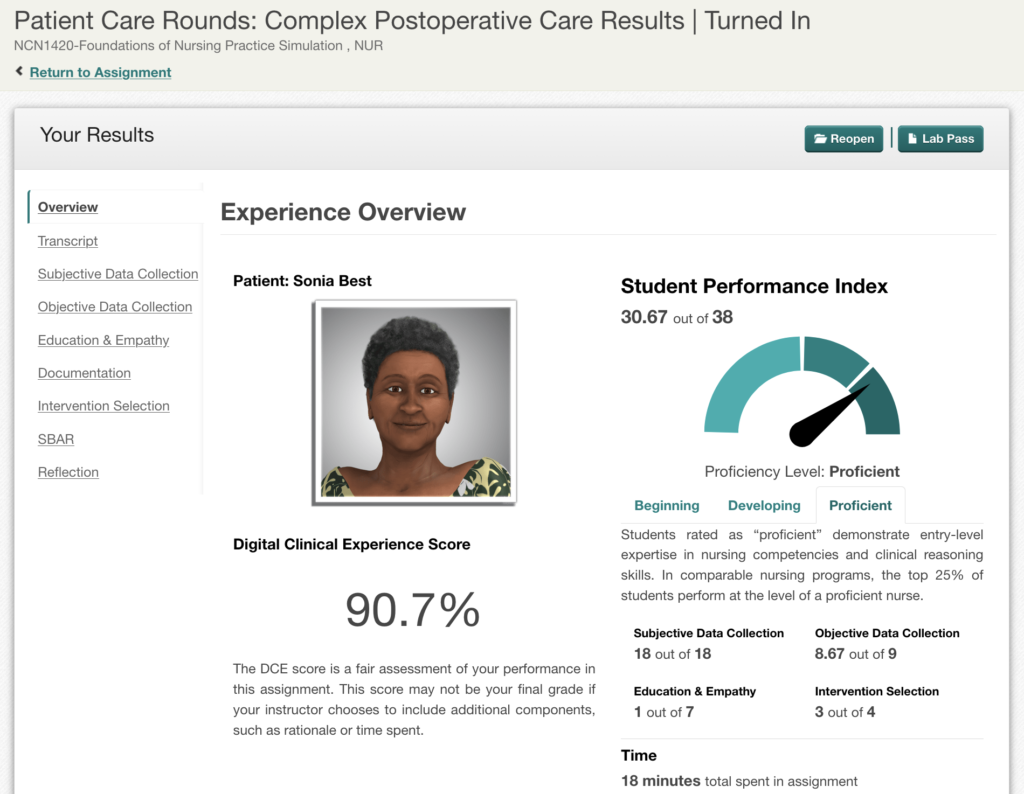
Category
Scored Items
Experts selected these topics as essential components of a strong, thorough interview with this patient.
Patient Status
Finding:
Asked about patient status
(Found)
Pro Tip: Asking a patient an open question about their current medical state allows them to respond subjectively with their perception of the current situation as they are experiencing it.Example Question:
How are you?
Medications
Finding:
Asked about medication regimen
(Found)
Pro Tip: Asking a patient about their current regimen of home and inpatient medications helps to ensure accurate and appropriate medication administration and documentation.Example Question:
What medications have you taken today?
Finding:
Asked about medication allergies
(Found)
Pro Tip: Asking a patient specifically about medication allergies helps to prevent errors with medication administration that could lead to negative patient impact.Example Question:
Do you have medication allergies?
Finding:
Followed up on pain medication
(Found)
Pro Tip: Asking a postoperative patient a question that follows up on pain medication can help determine if the patient feels comfortable with the current dose of opioids.Example Question:
How did you feel after your last pain pill?
Surgery Details
Finding:
Asked about surgical wound
(Found)
Pro Tip: Asking a postoperative patient about their surgical wound allows them to respond with how they feel about the wound, how painful it is, and how well the healing process is proceeding.Example Question:
How is your surgical wound?
Finding:
Asked about location of pain
(Found)
Pro Tip: Asking a postoperative patient about the location of their pain allows them to share their perception of the pain and if its location has changed.Example Question:
Where is the pain?
Finding:
Asked about level of pain
(Found)
Pro Tip: Asking a postoperative patient about the level of their pain can give insight into how well the patient is healing and whether they should receive more pain medication.Example Question:
Can you rate your current pain level on a scale of 0 to 10?
Finding:
Asked about postoperative interventions to prevent complications
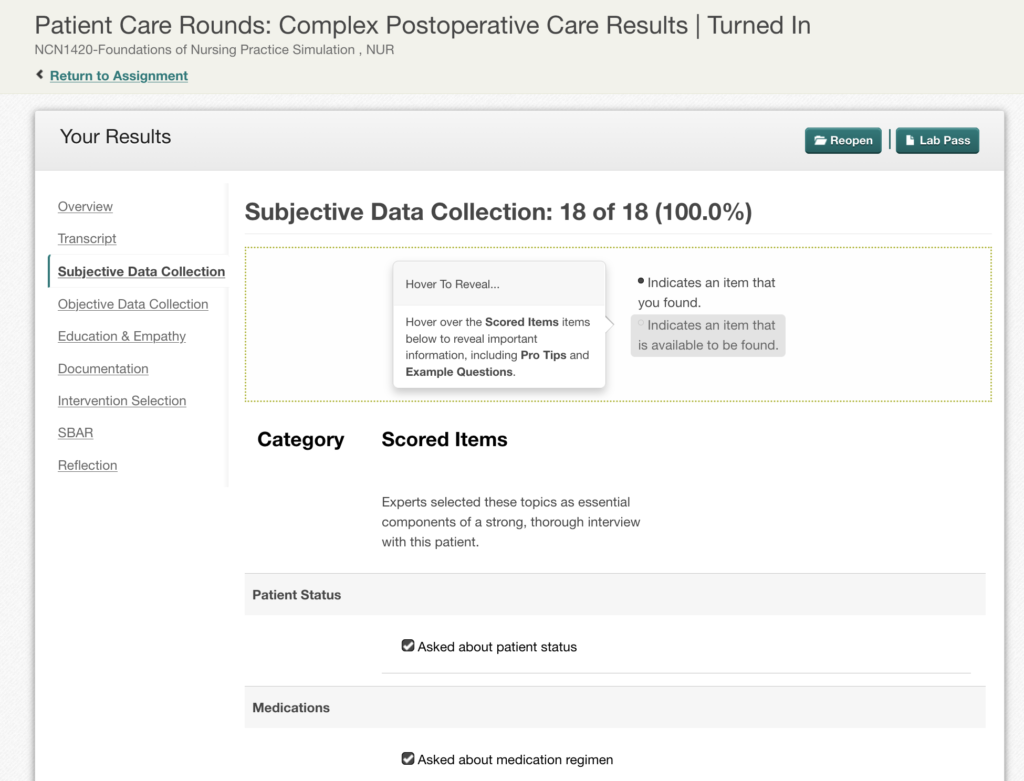
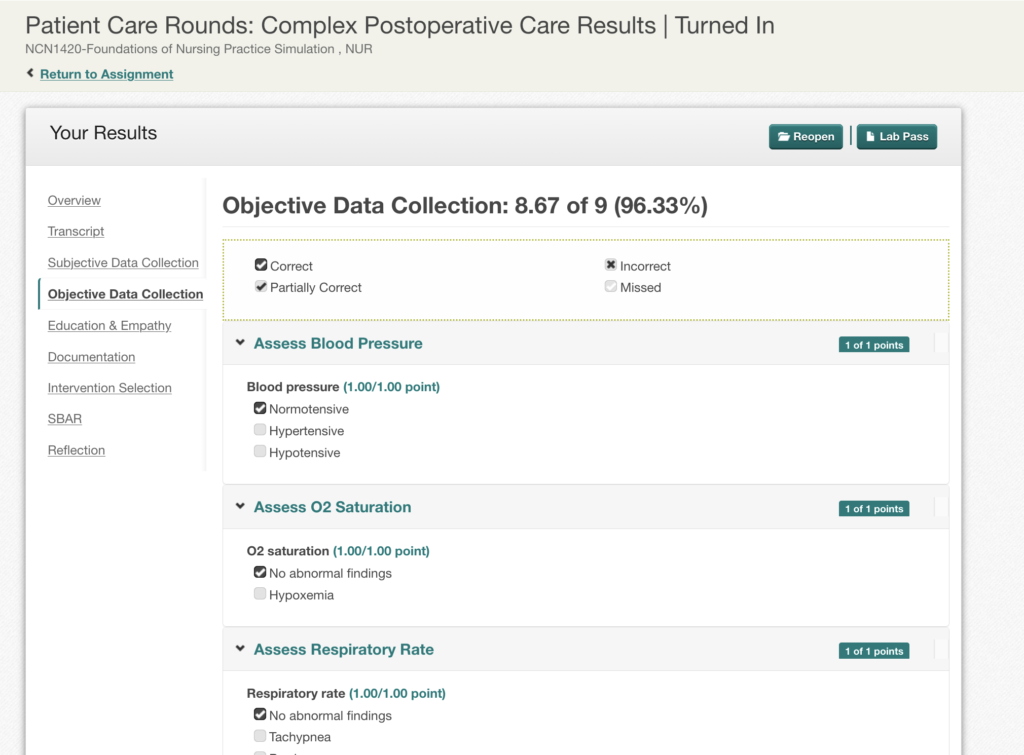
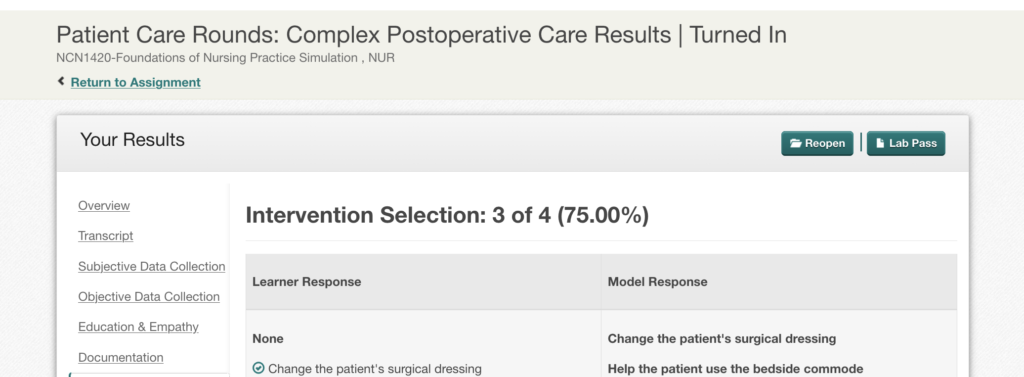
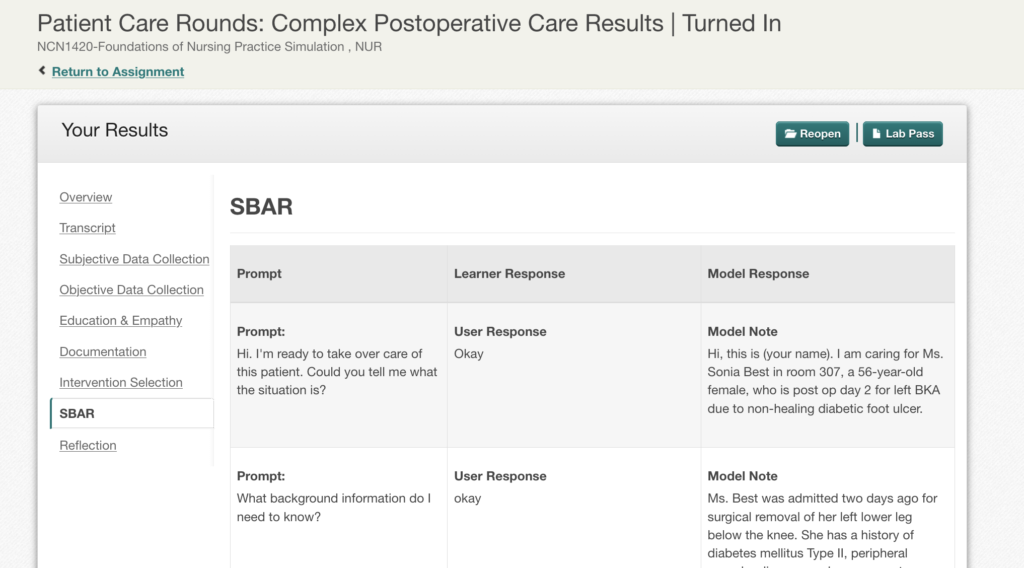
Add to cart to get subjective data, objective data, transcipt, intervention, and SBAR.
Related:(Completed) Shadow Health: Patient Care Rounds: Postmortem Care Samuel Green

Reviews
There are no reviews yet.