
Description
NR667 CEA Week 1 practice exam FNP Capstone
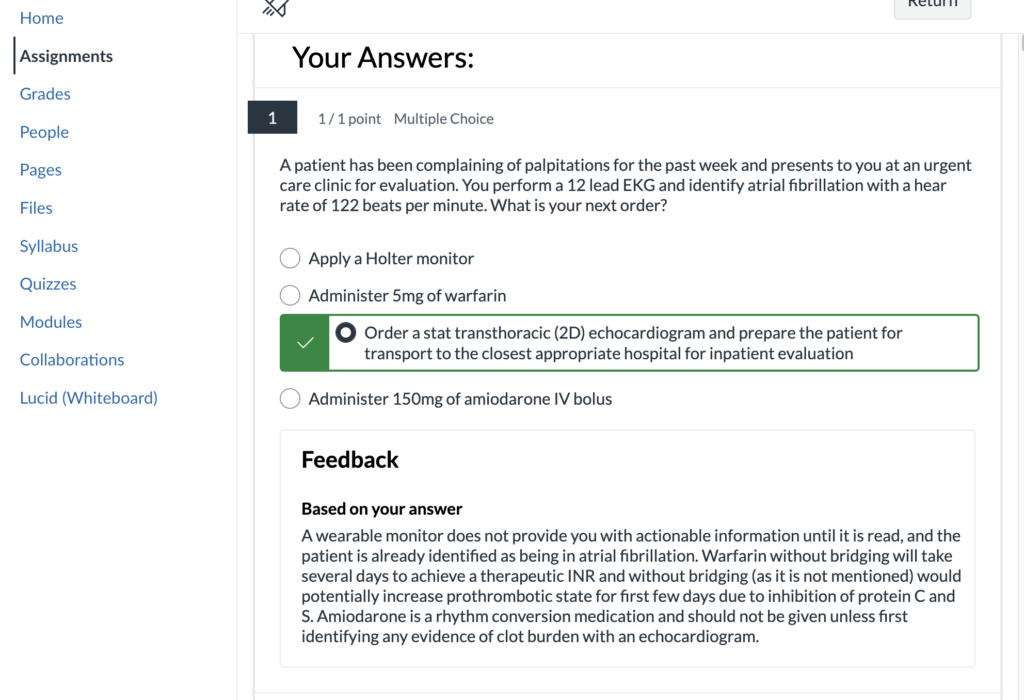
A patient has been complaining of palpitations for the past week and presents to you at an urgent care clinic for evaluation. You perform a 12 lead EKG and identify atrial fibrillation with a hear rate of 122 beats per minute. What is your next order?
Apply a Holter monitor
Administer 5mg of warfarin
Order a stat transthoracic (2D) echocardiogram and prepare the patient for transport to the closest appropriate hospital for inpatient evaluation
Administer 150mg of amiodarone IV bolus
A 60-year-old man with a history of hypertension and diabetes presents with a new-onset headache and visual disturbances. His blood pressure is 200/110 mmHg. What is the most appropriate management?
Advise dietary changes
Refer to the emergency department
Start insulin therapy
Prescribe antihypertensive medication and follow up in a week
Which of the following end-organ sequelae is not directly caused by uncontrolled hypertension?
AV nicking
Hemorrhagic stroke
Proteinuria
Peripheral neuropathy
An otherwise healthy African American adult male has been diagnosed with hypertension. He has been restricting his salt intake, eating a DASH (Dietary Approaches to Stop Hypertension) diet, and exercising more, but his blood pressure is still elevated. Which is the BEST medication to prescribe him?
Angiotensin-converting-enzyme inhibitor
Beta blocker
Calcium channel blocker
Alpha blocker
A patient arrives to the urgent care clinic after several days of crushing chest pain rated 10 out of 10 on a zero to 10 scale with associated left arm numbness and shortness of breath. The pain has lessened over the last 24 hrs to a 4 out of 10. Given the extended duration from onset to presentation, what finding would be expected on the EKG?
P wave inversion
QT prolongation
A normal EKG in areas of infarction
Presence of a large Q wave in areas of infarction
A nurse practitioner places a 76-year-old patient on nifedipine (Procardia) 10 mg t.i.d. for angina. The patient is unable to remember to take the medication at the scheduled times. The practitioner should:
discontinue the issue with the patient’s daughter.
reinforce the importance of taking the medication.
change the dose to extended release 30 mg daily.
increase the dosage to 20 mg b.i.d.
What is the chamber which directly pumps blood into the ascending aorta?
Left Ventricle
Left Atrium
Right Ventricle
Right Atrium
Your patient with a diagnosis of peripheral arterial disease asks you what is considered a non-modifiable risk factor. Which of the following represent the best answer for his question?
Medication compliance
Smoking less cigarettes
Tight glycemic control
Family history of PAD
Recommendation for lipid check in adolescent with type 1 DM?
5 years
1 year
2 years
10 years
A 55 year-old female patient with no previous cardiac history and no family history of hyperlipidemia with an acute myocardial infarction is treated successfully with a drug-eluting stent during a recent hospitalization. As their long-term care provider, you anticipate they were most likely to be also started on which of the following lipid-lowering agents at discharge?
PCSK9 inhibitor therapy
Moderate intensity statin therapy
High intensity statin therapy
Ezetimibe prior to initiating statin therapy
An adult patient diagnosed with type 2 diabetes mellitus presents for a recheck. The patient follows a carbohydrate counting diet and walks 30 minutes 5 times weekly. Current fasting blood glucose = 116 mg/dL [normal = less than 99 mg/dL] and A1c = 6.3% [normal = less than 7.0%]. In accordance with the American Diabetes Association, the nurse practitioner would recommend that the next follow-up appointment be scheduled for:
6 months.
1 year.
2 months.
9 months.
A patient is having increased thirst and urination. You have ruled out diabetes mellitus. After a compete history and physical you suspect diabetes insipidus. Your initial lab tests should include?
Plasma sodium, 24-hour urine osmolality and volume
Renal US and 24-hour urine for volume
Recording Intake and output
Plasma sodium and renal US
Pheochromocytoma is best diagnosed by which of the following tests:
24-hour urine for catecholamines/metanephrines and plasma metanephrines
Plasma metanephrines with blood pressure values
Adrenal CT/MRI
Blood pressure values and adrenal CT/MRI
A 33-year-old woman presents with intermittent palpitations, anxiety, and heat intolerance. Her thyroid function tests reveal low TSH and high free T4. What is the most likely diagnosis?
Hyperthyroidism
Graves’ disease
Thyroiditis
Hypothyroidism
A patient has a 3 cm pituitary mass noted on CT. What is your next step in evaluating the patient?
Repeat MRI in 3 months
Refer to surgery
Screen for hormone deficiencies
Start Cabergoline
A 33-year-old woman presents with irregular menstrual cycles, hirsutism, and obesity. Laboratory tests reveal elevated serum testosterone and LH ratio > 2:1. What is the most appropriate initial treatment?
Metformin
Clomiphene
Spironolactone
Oral contraceptives
Your patient has a diagnosis of Hashimoto’s and is on Levothyroxine 75 mcg daily. Her recent TSH was elevated at 15 uU/mL. Your next best action is to:
Assess for symptoms and recheck TSH in 8 weeks
Decrease Levothyroxine to 50 mcg daily
Increase Levothyroxine to 100 mcg daily
Repeat anti-thyroperoxidase antibodies (anti-TPO)
A 50-year-old man presents with fatigue, muscle weakness, and hyperpigmentation of the skin. Laboratory tests show low sodium, high potassium, and low cortisol levels. What is the most likely diagnosis?
Primary hyperaldosteronism
Cushing’s syndrome
Addison’s disease
Pheochromocytoma
Which of the following is the most common cause of Cushing’s Syndrome?
Long term excessive glucocorticoid use
ACTH-producing pituitary adenoma
Ectopic ACTH secretion
Adrenal adenoma
A 18-year-old woman presents with increased thirst, frequent urination, and unexplained weight loss. Her fasting plasma glucose level is 200 mg/dL. What is the most likely diagnosis?
Diabetes insipidus
Type 1 diabetes mellitus
Cushing’s syndrome
Syndrome of inappropriate Anti Diuretic Hormone (SIADH)
A frail elderly patient presents with constipation. Which of the following normal physiologic changes seen with aging is the most likely cause?
Decreased pancreatic secretions
Increased bile secretion
Decreased bowel muscle tone
Increased absorption of calcium
A 92-year-old presents with a decline in personal care and increasing forgetfulness. They had a CVA a three years ago with mild cognitive changes then which has slowly progressed. The more likely diagnosis in this case is?
Mini-strokes
Alzheimer’s dementia
Lewy-body dementia
Progressive vascular dementia
Which of the following gastrointestinal changes is associated with normal aging?
Increased salivation
Decreased incidence of gallstones
Decreased production of gastric acid
Increased esophageal emptying
The management of COPD in the elderly is best guided by:
arterial blood gases.
radiologic imaging.
symptomatology.
spirometry.
Which is best performed to assess the risk for fall in an 88-year old adult?
Global screening assessment
PHQ-2 questionnaire
Get up and go test
Clock-drawing test
A 64-year-old female with a past medical history significant for hepatitis C and Cirrhosis presents to your office with abdominal pain and distention. Exam reveals tense ascites. Which is indicated for treatment?
Furosemide 40mg PO BID
Labetalol 200mg PO BID
Transfer to the hospital for large Volume paracentesis
Midodrine 10mg PO TID
An adult female with rheumatoid arthritis presents to the office for a follow up. She is currently taking methotrexate and over the counter Ibuprofen. Today she complains of severe stomach pain and intense abdominal cramping. After the nurse practitioner makes appropriate adjustments to the patient’s medication regimen, the patient still complains of abdominal discomfort and reports dark stools. The practitioner suspects:
NSAID-induced hepatitis
Ulcerative colitis
Gastric ulceration
Diverticulitis
A patient with alcohol-induced liver disease presents with a sudden change in personality and loss of concentration and judgement after ingesting a meal high in protein. The nurse practitioner should plan to reduce the elevated level of which toxin in the blood?
Iron
Ammonia
Carbon dioxide
Mercury
A 59-year-old male presents with symptoms of abdominal pain, jaundice, and weight loss which he has not been trying to lose weight. What would be a malignancy associated with these symptoms?
Pancreatic cancer
Barrett’s Esophagus
Adenocarcinoma
Esophageal cancer
A 38-year-old male presents to the ER with complaints of abdominal pain, intermittent diarrhea, and has a positive occult blood. A stool culture is done which does not show any organism growth. His CRP and fecal calprotectin are elevated, and a colonoscopy is performed with biopsy which shows changes consistent with Crohn’s disease, which are mild. What of the following represent the first line of treatment for this illness?
NSAID’s and acetaminophen
Immunomodulators
Anti-TNF
5-ASA, antibiotics, corticosteroids
Your patient is suspected to have colon cancer. Which labs/marker are important to be performed on this patient?
BRCA 1 and 2
CEA
CA-125
AFP
A 63-year-old male presents with a suspected lower GI bleed. He reports passing frank small amounts of blood several times today. He denies use of NSAID’s or blood thinners. What questions would be important to ask to further differentiate your diagnosis?
Changes in bowel habits
All options are appropriate
Is there pain associated with passing of stool
When was his last colonoscopy?
A 26-year-old female presents with abdominal distention, bloating, and intermittent crampy abdominal pain relieved by defecation. She has 4 to 6 loose stools a day when stressed. Between bouts of diarrhea, she often has constipation. Physical examination results are normal. The CBC was normal. The most likely diagnosis is:
inflammatory bowel disease.
viral gastroenteritis.
diverticulitis.
irritable bowel syndrome.
An older adult has a follow-up fasting lipid panel 6 months after making therapeutic lifestyle changes. LDL=205mg/dL (Normal=<100mg/dL), HDL=44mg/dL, and triglycerides=180mg/dL (Normal-<150mg/dL). The patient is placed on statin therapy. Two months later, the patient presents for follow-up and complains of body aches. In addition to creatine phosphokinase (CPK), which of the following tests should the nurse practitioner order?
Liver transaminase (AST and ALT) levels
Serum calcium levels
reatine phosphokinase (CPK) electrophoresis
BUN and creatinine
A 70-year-old patient presents to the clinic with dyspnea, palpitations, and fatigue. The patient reports a 2-week history of blackened stools, which the patient attributes to drinking berry juice. Assessment reveals vital signs of BP = 110/60, P = 100, R = 24; Hgb = 4.5 g/dL; Hct = 16%. What is the most appropriate immediate intervention?
Order serum iron, total iron-binding capacity (TIBC), and ferritin.
Send to the emergency room.
Refer to a gastroenterologist.
Order a complete blood count (CBC) with differential.
Which act formed in 1996 was created to protect patient health information from being disclosed without the patient’s consent or knowledge?
Health Insurance Portability and Acountability Act (HIPAA)
Emergency Medical Treatment and Labor Act (EMTALA)
Family Educational Rights and Protection Act (FERPA)
Consolidated Omnibus Budget Reconciliation Act (COBRA)
Your irate patient on involuntary hold due to risk of harm to themself or others says they are going to “kill you when you leave work after they get discharged”. This statement is an example of which of the following?
Emotional battery
Verbal battery
None of these options
Verbal assault
A 65-year-old man presents for follow-up of his well-controlled hypertension and expresses concerns about maintaining bone health. He is a smoker and has a sedentary lifestyle. What is the most appropriate initial recommendation to reduce his risk of osteoporosis?
Hormone replacement therapy
Calcium and vitamin D supplementation
Weight-bearing exercise and smoking cessation
Start bisphosphonates
Multimodal analgesia involves the use of multiple agents to avoid reliance on which particular class of medication?
Topical analgesia agents
NSAIDS
Opioids
Muscle relaxants
A patient states they do not want to have any further medical care and wishes to leave against medical advice. Unknown to you, the healthcare tech then held their arm down to get an IV catheter placed against their will. The healthcare tech is at risk of being charged with which of the following:
Verbal battery
Verbal assault
Battery
None of these options
The medical term for nosebleed is which of the following?
Epistaxis
Nataxis
Hemostasis
Ataxia
Your patient was diagnosed with strep pharyngitis due to symptoms and exudative pharyngitis by appearance only and started on amoxicillin yesterday. Rapid strep test was negative and awaiting a throat culture to be read at this time. The patient has since developed a widespread rash across their entire torso and extending down their extremities. The patient also has associated splenomegaly. What is the most likely cause of this rash?
Keratosis pilaris in response to penicillin
Epstein Barr virus drug rash due to penicillin administration
Pityriasis rosea due to immune response
Lichens planus due to immune response
Click add to cart to get full solution
Retaed: (Completed) NR667 CEA Week 2 practice exam FNP Capstone

Reviews
There are no reviews yet.