
Description
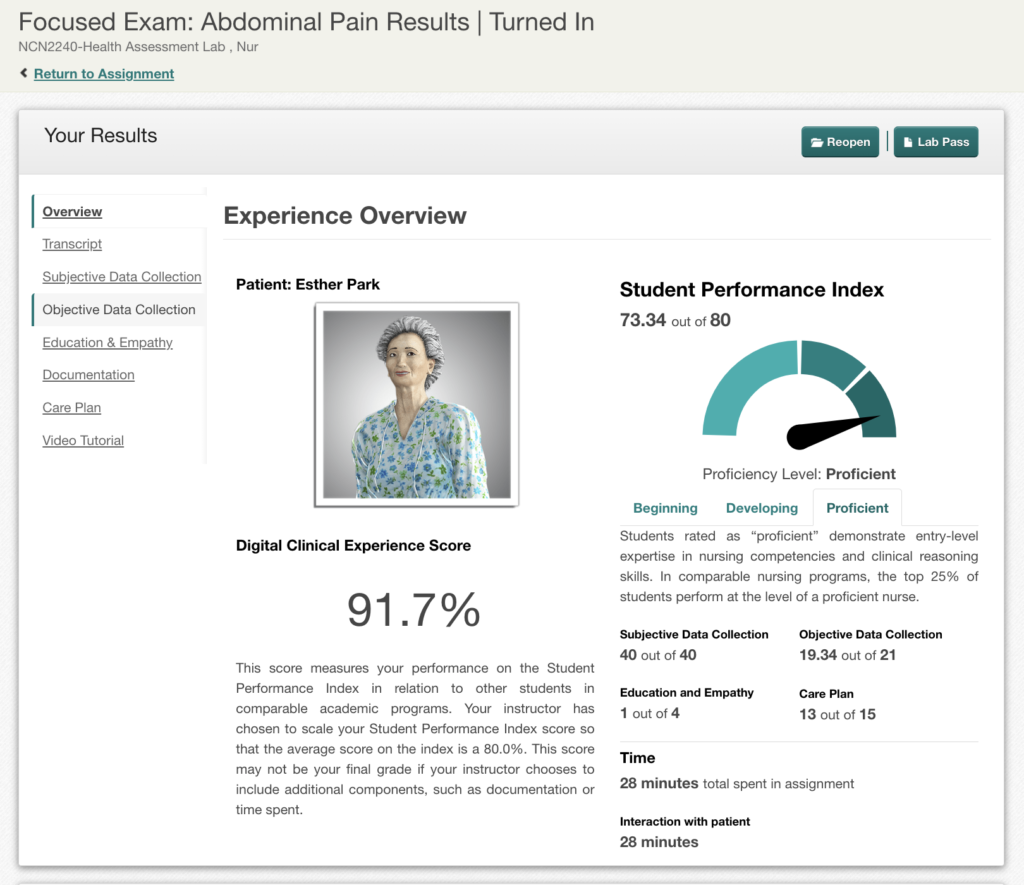
Shadow Health: Focused Exam: Abdominal Pain Esther Park
Assignment Description: This assignment provides the opportunity to conduct a focused exam on a patient presenting with abdominal pain. Interview the patient, assess the related body systems, and then complete post-exam activities.
-
Estimated Time to Complete: 65-100 minutes
-
Solution: Shadow Health: Focused Exam: Abdominal Pain Esther Park
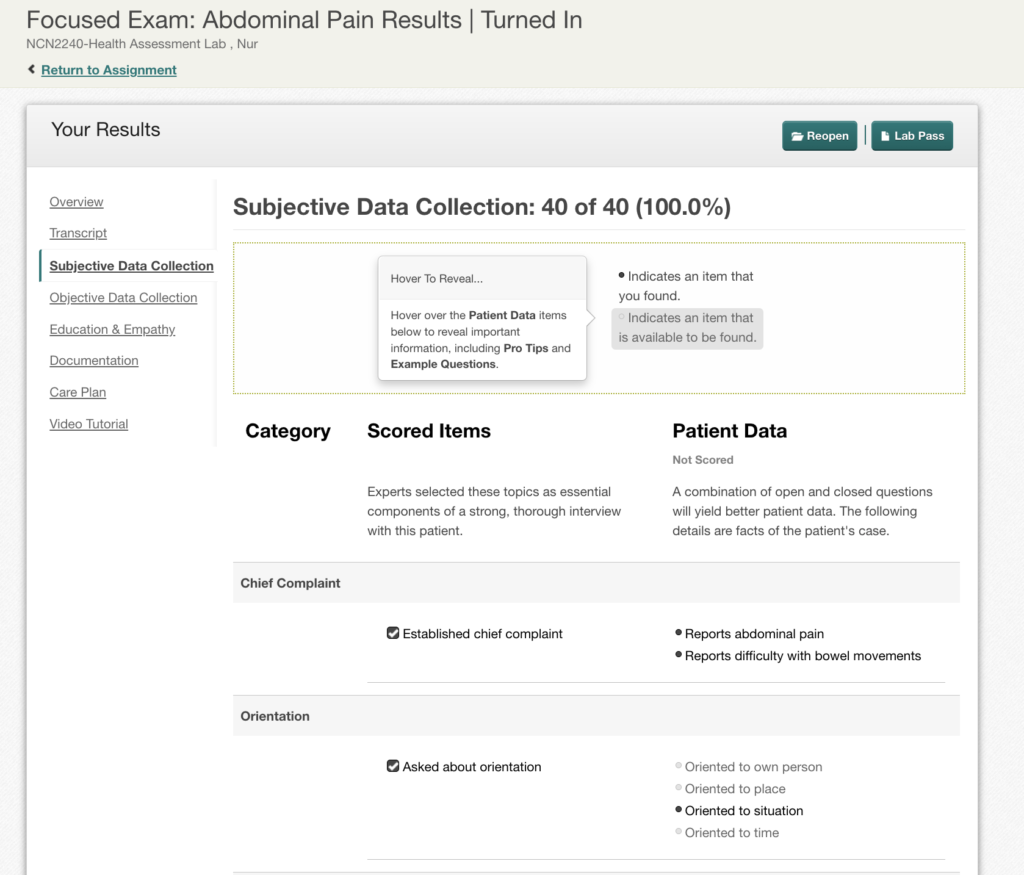
Category
Scored Items
Experts selected these topics as essential components of a strong, thorough interview with this patient.
Patient Data
Not Scored
A combination of open and closed questions will yield better patient data. The following details are facts of the patient’s case.
Chief Complaint
Finding:
Established chief complaint
Finding:
Reports abdominal pain
(Found)
Pro Tip: Abdominal pain can be caused by problems in the underlying organs, peritoneum, muscles, or blood vessels, changes in electrolytes or other blood contents, or even anxiety. Asking for details about the pain helps to determine the origin.Example Question:
Do you have any abdominal pain?
Finding:
Reports difficulty with bowel movements
(Found)
Pro Tip: Understanding all of a patient’s reason for visiting is an important foundation to establish. If there are multiple symptoms, especially related symptoms like constipation and bowel pain, follow up on each one during your interview.Example Question:
Are you able to have a bowel movement?
Orientation
Finding:
Asked about orientation
Finding:
Oriented to own person
(Available)
Pro Tip: You should ask geriatric patients to state their name so you can determine their cognitive functioning.Example Question:
Can you tell me who you are?
Finding:
Oriented to place
(Available)
Pro Tip: You should ask geriatric patients to identify where they are so you can determine their cognitive functioning.Example Question:
Do you know where you are right now?
Finding:
Oriented to situation
(Found)
Pro Tip: You should ask geriatric patients to identify their reason for being here so you can determine their cognitive functioning.Example Question:
Do you know why you are here today?
Finding:
Oriented to time
(Available)
Pro Tip: You should ask geriatric patients to identify the date and year so you can determine their cognitive functioning.Example Question:
What is the date and year?
History of Presenting Illness
Finding:
Asked about onset of the pain
Finding:
Reports discomfort for the past five days
(Found)
Pro Tip: Whenever you are assessing a symptom or a health condition, in this case stomach pain, inquiring about onset allows you to assess the severity and the progression of the problem.Example Question:
How long have you had stomach pain?
Finding:
Reports pain worsened intensely 2-3 days ago
(Available)
Pro Tip: Whenever you are assessing a symptom or a health condition, in this case stomach pain, inquiring about changes in the pain allows you to assess the severity and the progression of the problem.Example Question:
Has the stomach pain changed?
Finding:
Asked about location of the pain
Finding:
Reports pain in lower abdomen
(Found)
Pro Tip: Identification of the location of your patient’s discomfort can provide important clues about its cause and how it should be best treated.Example Question:
Where is your discomfort located?
Finding:
Reports pain is not localized
(Available)
Pro Tip: Identifying the location of your patient’s pain provides important clues about its cause and how to treat it best.Example Question:
Is the pain in a specific spot?
Finding:
Denies flank pain
(Available)
Pro Tip: Flank pain often occurs with disorders of the urinary tract. When a patient complains of flank pain, assess for co-occurring symptoms such as fever, chills, hematuria, and dysuria.Example Question:
Do you have pain on your sides?
Finding:
Asked about pain rating on a scale
Finding:
Reports current pain rating of 2/10
(Found)
Pro Tip: For many people, it is difficult to clearly describe pain. Asking your patient to rate her pain on a scale from zero to 10 develops a consistent measure of pain severity.Example Question:
How would you rate your pain on a scale of one to ten?
Finding:
Reports pain at its lowest is 2/10
(Available)
Pro Tip: For many people, it is difficult to clearly describe pain. Asking your patient to rate her pain at its lowest on a scale from zero to 10 develops a consistent measure of pain severity.Example Question:
How would you rate your pain at its lowest?
Finding:
Reports pain at its worst is 8/10
(Available)
Pro Tip: For many people, it is difficult to clearly describe pain. Asking your patient to rate her pain at its highest on a scale from zero to 10 develops a consistent measure of pain severity.Example Question:
How would you rate your pain at its worst?
Finding:
Asked about characteristics of the pain
Finding:
Describes pain as dull
(Found)
Pro Tip: Asking your patient to describe her pain helps identify its cause and the severity. Patients may not know how to answer, so you may need to suggest words like sharp, dull, burning, throbbing, or shooting.Example Question:
Can you describe the pain?
Finding:
Describes pain as cramping
(Found)
Pro Tip: Asking your patient to describe her pain helps identify its cause and the severity. Patients may not know how to answer, so you may need to suggest words like sharp, dull, burning, throbbing, or shooting.Example Question:
Can you describe the pain?
Finding:
Describes pain as constant
(Found)
Pro Tip: It’s important to ask your patient if her pain is constant or intermittent in order to determine her level of discomfort and identify the cause of the pain. Constant pain is often best managed with around-the-clock pain medications.Example Question:
Is your pain constant?
Finding:
Describes pain as fluctuating in severity
(Found)
Pro Tip: Whenever you are assessing a symptom or a health condition, in this case stomach pain, inquiring about changes in the pain allows you to assess the severity and the nature of the problem.Example Question:
Does your pain fluctuate?
Finding:
Asked about non-pharmacological relieving factors
Finding:
Reports that resting helps relieve pain
(Found)
Pro Tip: Asking about how your patient has been managing her pain assesses her current condition and her approach to self-care. The results of her previous treatment may be helpful in your diagnosis and the development of her new treatment plan, as well as a good opportunity to educate your patient on effective self-care practices.Example Question:
What relieves your pain besides medication?
Finding:
Reports drinking warm water to relieve pain was ineffective
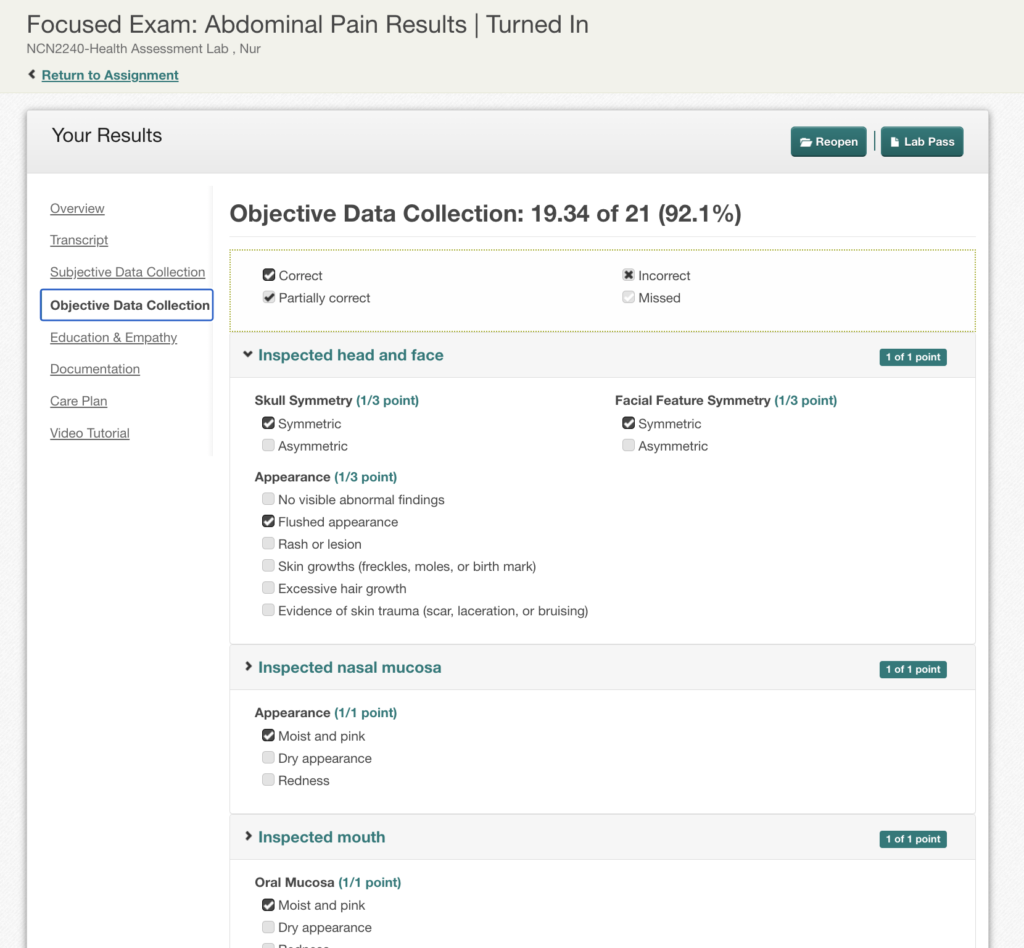
Add to cart to get both subjective and objective data
Related:(Completed) Shadow Health: Comprehensive Assessment Tina Jones

Reviews
There are no reviews yet.