
Description
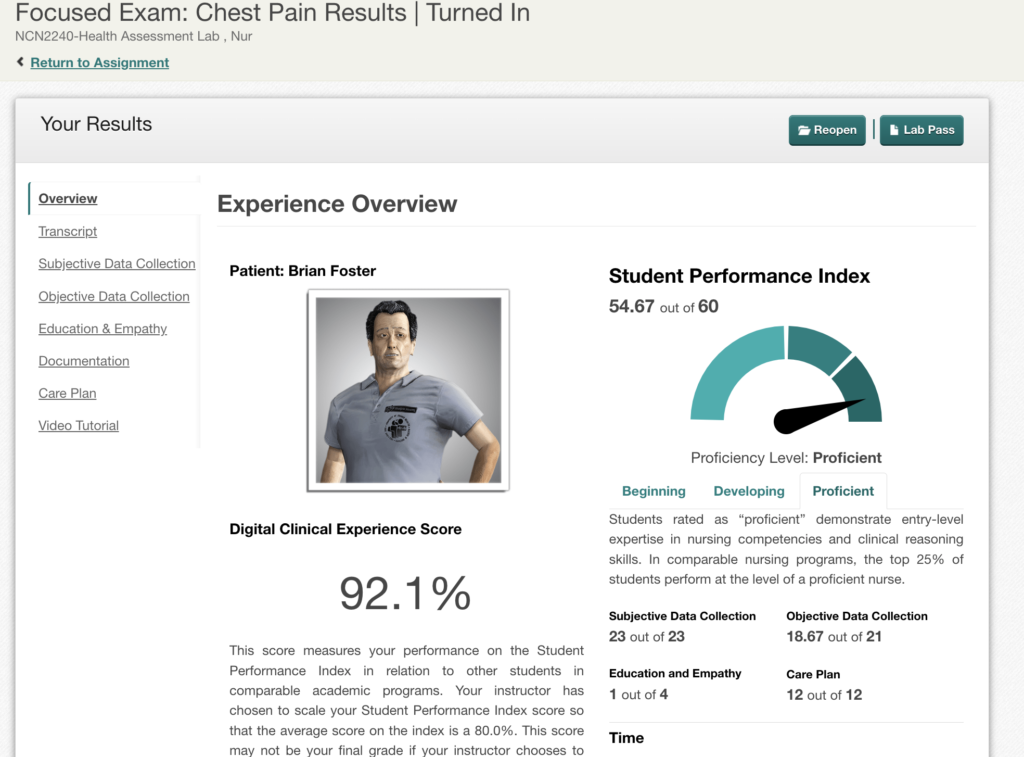
Shadow Health: Focused Exam: Chest Pain Brian Foster
Assignment Description: This assignment provides the opportunity to conduct a focused exam on a patient presenting with chest pain and requiring emergency intervention. Interview the patient, assess the related body systems, and then complete post-exam activities.
-
Estimated Time to Complete: 65-100 minutes
-
Finding:
Asked relevant health history
Finding:
Reports high blood pressure
(Found)
Pro Tip: Hypertension is the most important risk factor for stroke. Soliciting a health history from Brian will allow you to assess his risk of cardiovascular disease.Example Question:
Do you have high blood pressure?
Finding:
Reports high cholesterol
(Available)
Pro Tip: High cholesterol can lead to cardiovascular disease. Asking Brian whether he’s had a history of high cholesterol reveals important details about his cardiovascular health.Example Question:
Do you have high cholesterol?
Finding:
Denies history of pulmonary embolism
Solution: Shadow Health: Focused Exam: Chest Pain Brian Foster
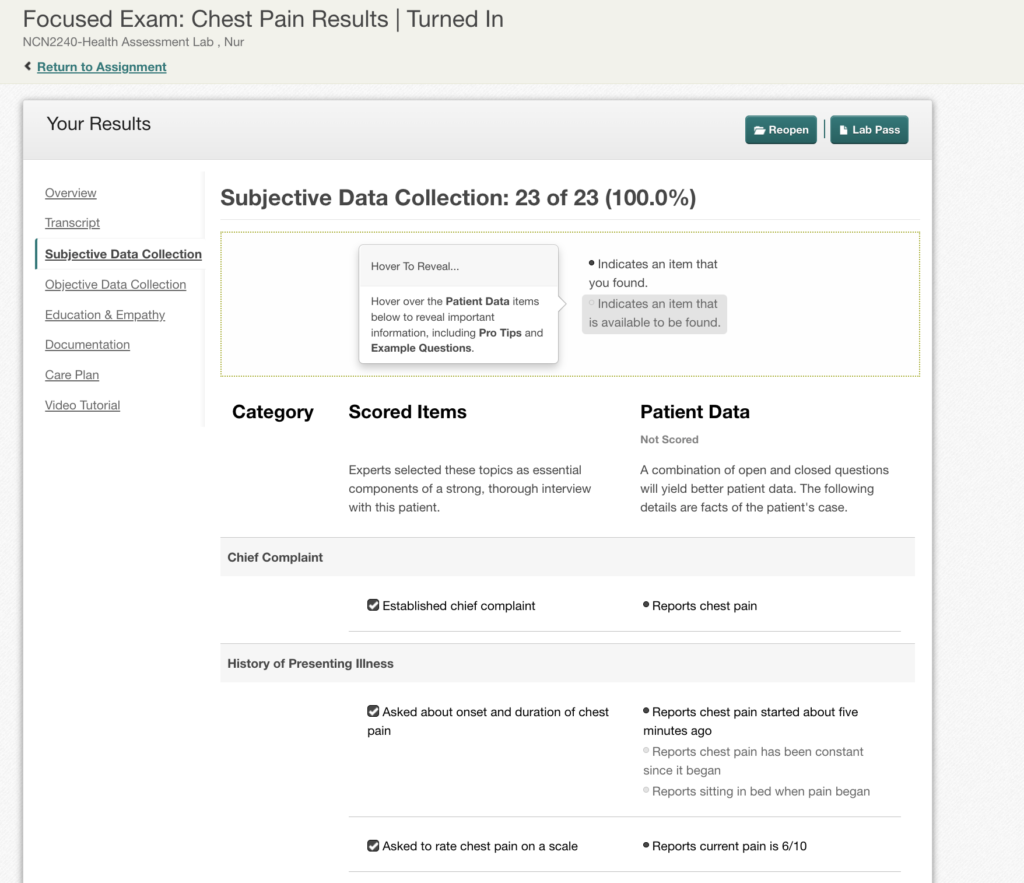
Category
Scored Items
Experts selected these topics as essential components of a strong, thorough interview with this patient.
Patient Data
Not Scored
A combination of open and closed questions will yield better patient data. The following details are facts of the patient’s case.
Chief Complaint
History of Presenting Illness
Finding:
Asked about onset and duration of chest pain
Finding:
Reports chest pain started about five minutes ago
(Found)
Pro Tip: Establishing the onset of a patient’s chest pain is essential in diagnosing its severity as well as the comfort of the patient.Example Question:
When did the chest pain start?
Finding:
Reports chest pain has been constant since it began
(Available)
Pro Tip: Knowing the duration of a patient’s pain gives you a more complete picture of its severity and potential impact on the patient’s health.Example Question:
How long does the chest pain last?
Finding:
Reports sitting in bed when pain began
(Available)
Pro Tip: A patient’s position and posture when their pain began can inform you as to the nature of the pain, as pain upon exertion often has different causes than pain upon resting.Example Question:
Were you sitting when the pain began?
Finding:
Asked to rate chest pain on a scale
Finding:
Reports current pain is 6/10
(Found)
Pro Tip: For many patients, it is difficult to clearly describe pain. Asking Brian to rate his pain on a scale from 0 to 10 develops a consistent measure of pain severity.Example Question:
On a scale of 0 to 10 how would you rate the chest pain?
Finding:
Asked about on characteristics of the pain
Finding:
Describes pain as tight and uncomfortable
(Found)
Pro Tip: Asking Brian to describe his pain helps identify the cause and the severity of his discomfort. Patients may not know how to answer, so you may need to suggest words like sharp, dull, crushing, gnawing, or burning.Example Question:
Can you describe your pain?
Finding:
Denies crushing pain
(Found)
Pro Tip: Asking Brian to describe his pain helps identify the cause and the severity of his discomfort. Patients may not know how to answer, so you may need to suggest words like sharp, dull, crushing, gnawing, or burning.Example Question:
Is the pain crushing?
Finding:
Denies gnawing or tearing pain
(Found)
Pro Tip: Asking Brian to describe his pain helps identify the cause and the severity of his discomfort. Patients may not know how to answer, so you may need to suggest words like sharp, dull, crushing, gnawing, or burning.Example Question:
Is the pain gnawing?
Finding:
Denies burning pain
(Found)
Pro Tip: Asking Brian to describe his pain helps identify the cause and the severity of his discomfort. Patients may not know how to answer, so you may need to suggest words like sharp, dull, crushing, gnawing, or burning.Example Question:
Is the pain burning?
Finding:
Asked about location of the pain
Finding:
Reports pain location is in middle of the chest
(Found)
Pro Tip: Identifying the location of a patient’s pain is essential in determining which body systems are affected, the underlying cause of the pain, and how best to treat it.Example Question:
Where is the pain?
Finding:
Reports slight pain in left shoulder
(Found)
Pro Tip: Pain radiation is an important symptom that can be helpful in understanding the cause of pain and narrowing the diagnosis.Example Question:
Does the pain radiate?
Finding:
Denies arm pain
(Available)
Pro Tip: When combined with chest pain, arm pain can be a telling sign that the complaint may be cardiac in nature.Example Question:
Do you have arm pain?
Finding:
Denies back pain
(Available)
Pro Tip: When combined with chest pain, back pain can be a telling sign that the complaint may be cardiac in nature.Example Question:
Do you have back pain?
Finding:
Denies jaw pain
(Available)
Pro Tip: When combined with chest pain, jaw pain can be a telling sign that the complaint may be cardiac in nature.Example Question:
Do you have jaw pain?
Finding:
Denies neck pain
(Available)
Pro Tip: When combined with chest pain, neck pain can be a telling sign that the complaint may be cardiac in nature.Example Question:
Do you have neck pain?
Finding:
Asked about pain triggers
Finding:
Reports pain is aggravated by exertion
(Found)
Pro Tip: Aggravating factors reveal further information about the nature of the pain and the body systems affected.Example Question:
What makes the pain worse?
Finding:
Asked about stress and anxiety
Finding:
Reports generally low stress lifestyle
(Available)
Pro Tip: Stress can have a profound effect on the patient’s health and wellness. Asking about stress is an important part of any health assessment.Example Question:
What is your usual stress level?
Finding:
Denies history of anxiety
(Found)
Pro Tip: Symptoms such as chest pain can be caused or exacerbated by episodes of anxiety. Asking Brian if he’s ever suffered from anxiety can point to underlying stressors or triggers.Example Question:
Do you have a history of anxiety?
Finding:
Denies history of panic attacks
(Available)
Pro Tip: Symptoms such as chest pain can be caused or exacerbated by episodes of anxiety. Asking Brian if he’s ever had a panic attack can point to underlying stressors or triggers.Example Question:
Have you ever had a panic attack?
Past Medical History
Finding:
Reports chest pain
(Found)
Pro Tip: Asking a patient broadly about their chief complaint allows them to answer in their own words and confirm information that you may have already received from another source.Example Question:
Do you have chest pain?
Finding:
Established chief complaint
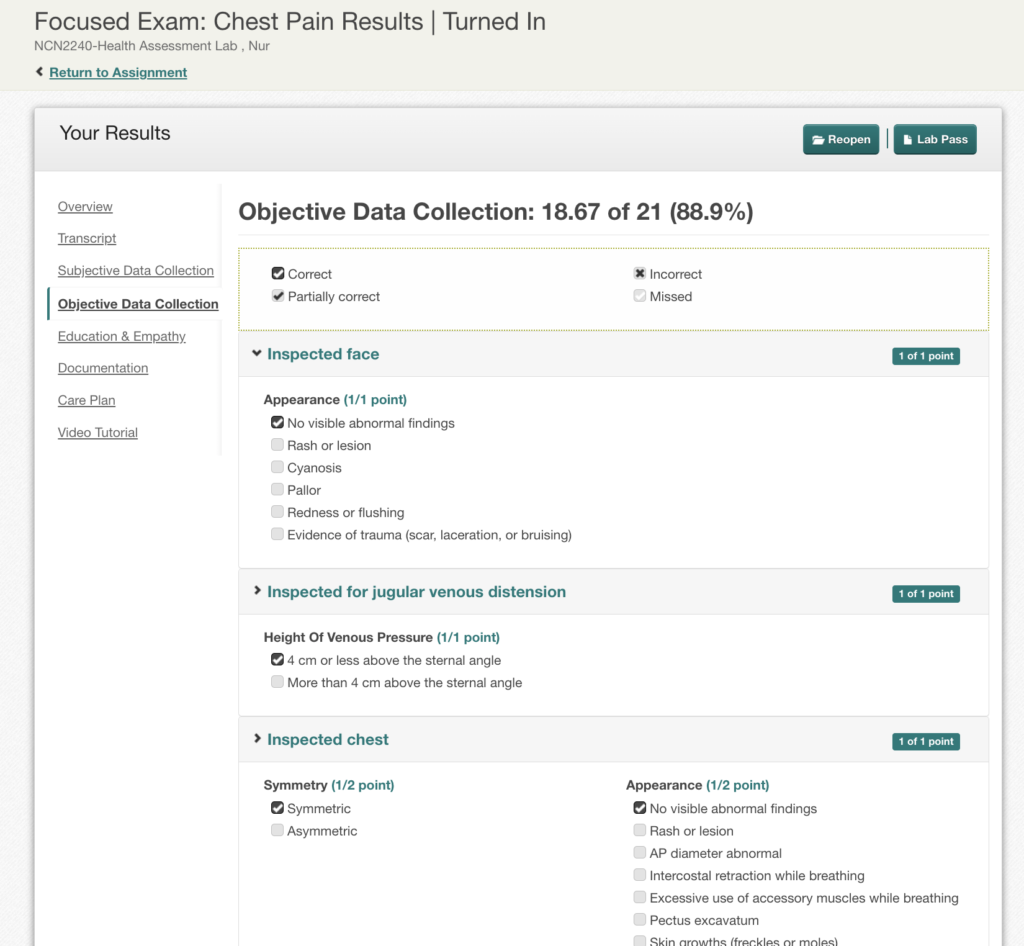
Add to cart to get bothe subjective and objective data
Related:(Completed) Shadow Health: Focused Exam: Abdominal Pain Esther Park

Reviews
There are no reviews yet.