
Description
NURS 6630 Week 9 Blog Substance Use Addiction/Impulse Control Disorder
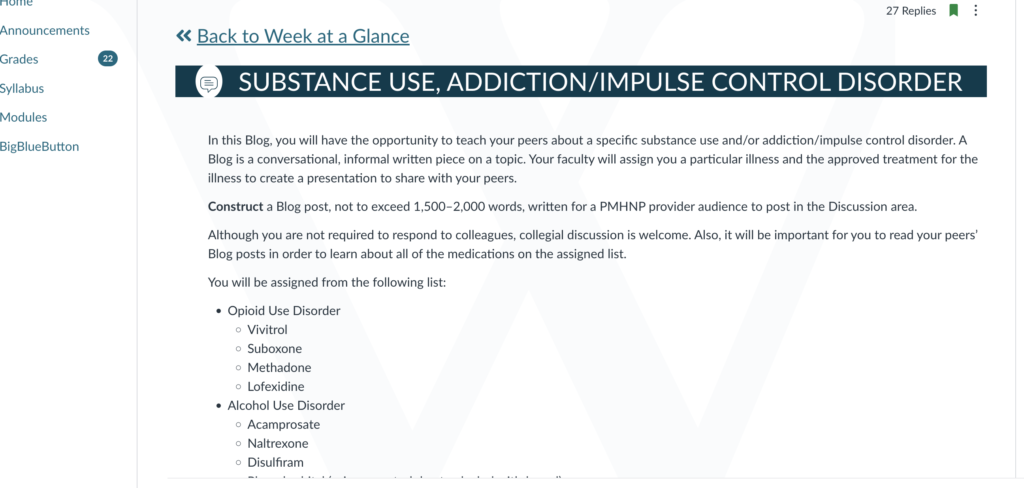
In this Blog, you will have the opportunity to teach your peers about a specific substance use and/or addiction/impulse control disorder. A Blog is a conversational, informal written piece on a topic. Your faculty will assign you a particular illness and the approved treatment for the illness to create a presentation to share with your peers.
Construct a Blog post, not to exceed 1,500–2,000 words, written for a PMHNP provider audience to post in the Discussion area.
Although you are not required to respond to colleagues, collegial discussion is welcome. Also, it will be important for you to read your peers’ Blog posts in order to learn about all of the medications on the assigned list.
You will be assigned from the following list:
- Opioid Use Disorder
- Vivitrol
- Suboxone
- Methadone
- Lofexidine
- Alcohol Use Disorder
- Acamprosate
- Naltrexone
- Disulfiram
- Phenobarbital (seizure control due to alcohol withdrawal)
- Chlordiazepoxide
- Cannabis Use Disorder
- Nefazodone*
- Fluoxetine*
- Gabapentin*
- Buspirone*
- Stimulant Use Disorder (cocaine, methamphetamine)
- Antipsychotic Medications*
- Combination Injectable Naltrexone*
- Bupropion*
- Gabapentin*
- Tobacco Use Disorder
- Nicotine replacement patch
- Nicotine replacement gum
- Nicotine replacement inhaler
- Zyban
- Sedative/Hypnotic Anxiolytic Use Disorder
- Gabapentin*
- Buspirone*
- Flumazenil*
- Trazodone*
- Binge Eating Disorder (BED)
- Lisdexamphetamine
*Indicates not FDA approved.
Resources
Be sure to review the Learning Resources before completing this activity.
Click the weekly resources link to access the resources.
By Day 5 of Week 9
Post your Blog response by doing the following:
- Identify the substance or addiction with discussion on pertinent diagnostic criteria for the use disorder.
- Identify the street names of the substance for the use disorder.
- Describe how someone can use or abuse the substance (oral, smoke, IV, etc.).
- Describe the symptoms of someone under the influence of this substance.
- Describe the symptoms of someone under the withdrawal of this substance.
After describing the substance, discuss the treatment recommendations by doing the following:
- Identify the first-line treatment options.
- Identify the FDA-approved medications for the substance.
Note: If there are no FDA-approved medications, describe any evidenced-based, clinically acceptable off-label medications to treat the illness.
- Identify the proposed mechanisms of action for the medication to treat the illness.
- Describe the common side effects of the medication.
- Describe how the patient should take the medication.
- Identify any baseline and/or ongoing tests and assessment(s) needed when taking the medication.
- Describe the non-pharmacologic intervention recommendations.
This Assignment requires a minimum of three (3) peer-reviewed, evidence-based scholarly references outside of course Learning Resources.
Solutuion:NURS 6630 Week 9 Blog Substance Use Addiction/Impulse Control Disorder
A PMHNP’s Guide to Opioid Use Disorder
Opioid use disorder (OUD) remains one of the most pressing challenges related to our healthcare system. As Psychiatric Mental Health Nurse Practitioners (PMHNPs) we meet patients with OUD in practice settings. Learning about this complicated condition and its evidence-based interventions is not only a clinical competence, but also a professional obligation that could literally save lives. To equip you with practical knowledge on the clinical use of OUD, this blog gives a detailed discussion on OUD and the approved medications, Vivitrol, Suboxone, Methadone, and Lofexidine.
Understanding Opioid Use Disorder
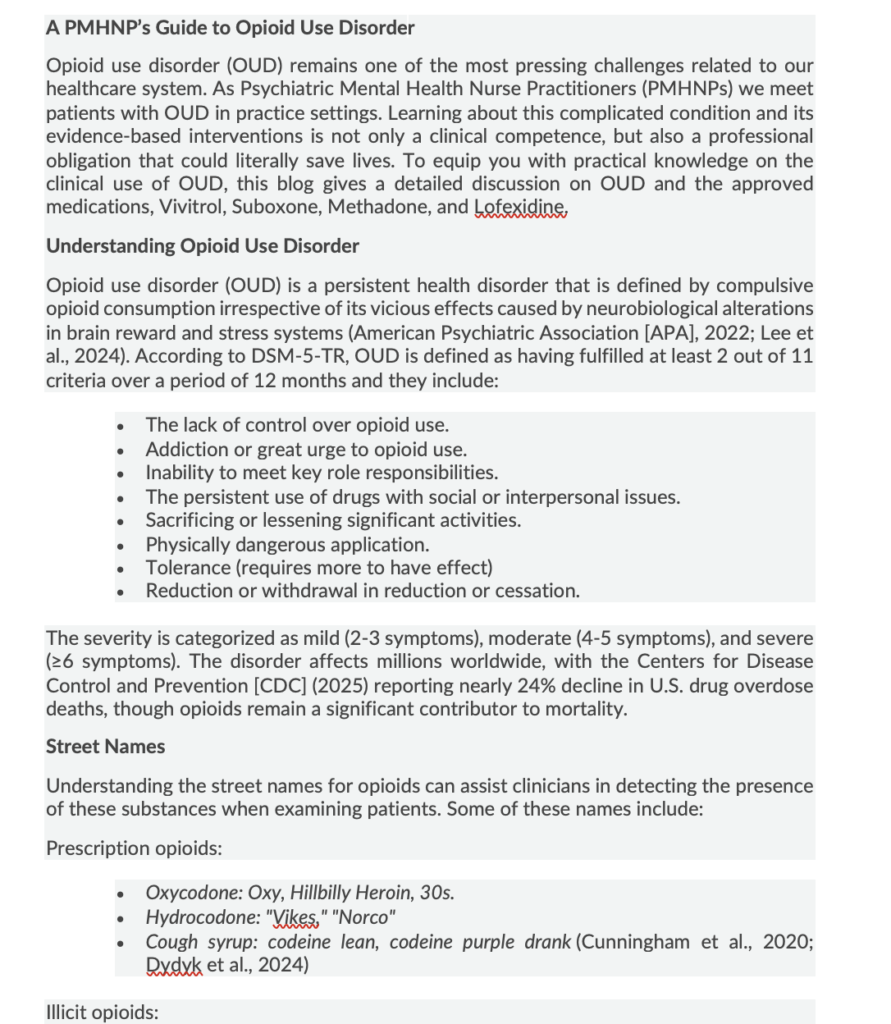
Opioid use disorder (OUD) is a persistent health disorder that is defined by compulsive opioid consumption irrespective of its vicious effects caused by neurobiological alterations in brain reward and stress systems (American Psychiatric Association [APA], 2022; Lee et al., 2024). According to DSM-5-TR, OUD is defined as having fulfilled at least 2 out of 11 criteria over a period of 12 months and they include:
- The lack of control over opioid use.
- Addiction or great urge to opioid use.
- Inability to meet key role responsibilities.
- The persistent use of drugs with social or interpersonal issues.
- Sacrificing or lessening significant activities.
- Physically dangerous application.
- Tolerance (requires more to have effect)
- Reduction or withdrawal in reduction or cessation.
The severity is categorized as mild (2-3 symptoms), moderate (4-5 symptoms), and severe (≥6 symptoms). The disorder affects millions worldwide, with the Centers for Disease Control and Prevention [CDC] (2025) reporting nearly 24% decline in U.S. drug overdose deaths, though opioids remain a significant contributor to mortality.
Street Names
Understanding the street names for opioids can assist clinicians in detecting the presence of these substances when examining patients. Some of these names include:
Prescription opioids:
- Oxycodone: Oxy, Hillbilly Heroin, 30s.
- Hydrocodone: “Vikes,” “Norco”
- Cough syrup: codeine lean, codeine purple drank (Cunningham et al., 2020; Dydyk et al., 2024)
Illicit opioids:
- Heroin: “H,” “Smack,” “Black Tar”
- Fentanyl: Apache, China White, Murder 8 (Dowell, 2022; Oliveira et al., 2023)
Fentanyl and analogs are especially hazardous because of the variability of potency, even 2 milligrams may be fatal. Fentanyl is illegally manufactured and usually combined with other substances such as heroin or cocaine or pressed into counterfeit pills, forming unpredictable and potentially fatal combinations (Hawk et al., 2021; U.S. Food and Drug Administration [FDA], 2024).
Routes of Use and Associated Risks
- Oral route: swallowing pills; usually associated with prescription opioids but may result in unaccelerated absorption and unintended overdose (Dydyk et al., 2024)
- Intranasally: Snorting swallowed pills or heroin; bypasses first-pass metabolism, hastens the effect (Cunningham et al., 2020)
- Intravenous injection: The fastest action that exposes an individual to the risk of contracting infectious diseases (HIV, hepatitis C), endocarditis, and collapsed veins (CDC, 2024)
- Smoking: Not needle-phobic and damaging to the lungs and exposing others to second hand smoke.
Administration route has an important influence on the risk of overdose, making intravenous use the most dangerous in the short term because of the fast effect and the possible contamination of the drug product (Hawk et al., 2021).
Identification of Signs and Symptoms
The signs of opioid intoxication include pinpoint pupils (miosis), drowsiness or “nodding off”, slurred speech, shallow breaths (respiratory depression), euphoria or relaxation, disorientation or poor judgment (Dydyk et al., 2024). Respiratory depression may lead to cyanosis, apnea and death in cases of overdose. Limp body, unresponsiveness, gurgling (the death rattle) and pale or clammy skin are other serious symptoms. Substances containing Fentanyl can lead to the emergence of muscular rigidity in a short period of time (wooden chest syndrome), which complicates resuscitation (Edens et al., 2024).
The Symptoms of Opioid Withdrawal
Opioid withdrawal follows a predictable course, although the degree depends on the opioid, the duration of use and the factors of the patient themselves. Short-acting opioid..

Reviews
There are no reviews yet.